Inquiry
Form loading...

How to Choose the Best Stainless Steel Mixing Bowls?

Choosing Stainless Steel Mixing Bowls sounds simple—until one slides across the counter or feels too shallow for whisking. Alton Brown, a culinary educator known for his practical approach to kitchen equipment, has said, “The only unitasker allowed in my kitchen is a fire extinguisher.” His point offers a useful lens: a good bowl should serve more than one small task. It might hold salad greens, catch sifted flour, or steady a hand mixer. This guide looks at what makes Stainless Steel Mixing Bowls useful, and where a set can disappoint.

We will consider steel quality, bowl shape, capacity, rim design, and stability. A polished surface looks neat, but finish alone does not tell you how sturdy a bowl feels. Check whether the base sits flat on a damp counter. Notice how the rim feels when you pour. Small details matter. So does storage: nested bowls can save cabinet space, though some sets fit together awkwardly. There is no perfect set for every kitchen. A baker working with a large dough may need deeper bowls; someone whisking a single egg may prefer a smaller one. Even a carefully chosen set can have an odd size you rarely reach for. That is worth considering. The sections ahead offer practical checks to help match bowl design with real cooking habits, rather than relying on appearance or a crowded product listing.
How to Choose the Best Stainless Steel Mixing Bowls?

Understanding Stainless Steel Grades and Bowl Construction

Stainless steel grades affect how a mixing bowl handles moisture, salt, and acidic ingredients. Grade 304, often described as 18/8, is a practical choice for everyday kitchen use. It resists corrosion well and suits tasks such as whisking vinaigrette or holding damp dough. Grade 316 includes molybdenum, which improves resistance to salty or acidic conditions, but that extra protection may not matter for ordinary mixing. Lower-cost grades can vary, so a grade label alone does not tell the whole story. A magnet test is not reliable proof of quality; shaping can make some stainless steel slightly magnetic.

Construction matters in your hands. A heavier bowl tends to sit more steadily while you whisk, while a very thin one may flex or wobble against the counter. Check the rim: a smooth, rolled edge feels comfortable to grip and is less likely to have sharp spots. Look inside for seams, rough patches, or places where residue could collect. A brushed finish can disguise everyday scratches; a polished interior makes food easier to see, though fingerprints show quickly. Small trade-offs.

Nesting bowls save cupboard space, but compare their shapes before buying. Some fit together so tightly that separating them takes two hands. A broad base can help a bowl stay put, yet a deep, narrow shape may work better for whipping cream. I would not judge a bowl by shine alone. Even a well-made one can feel awkward if its rim is slippery or its size does not suit your counter.
Choosing Bowl Sizes and Capacities for Your Cooking Tasks

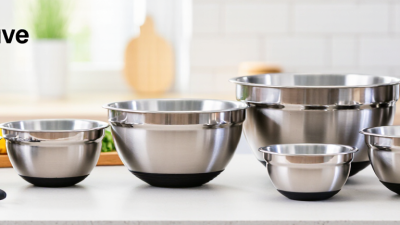
Choose bowl capacity around the task, not just the recipe quantity. A 1-quart bowl works for whisking two eggs or mixing a small dressing. A 2- to 3-quart bowl gives pancake batter room to move without splashing. For tossing a salad or combining cookie dough, a 4- to 5-quart bowl is often more comfortable. NIST conversion factors put one U.S. cup at about 237 milliliters, so a 4-quart bowl holds roughly 3.8 liters. Check whether listed capacity means brim-full volume; usable space is lower.

For daily cooking, a nesting set near 1, 2, 3, and 5 quarts covers many jobs while saving cupboard space. Match bowl size to both ingredient volume and tool movement: a balloon whisk needs extra headroom, while a spatula can work in a tighter bowl. Small bowls are easier to handle, but an oversized bowl can make a single egg awkward to whisk. There is no perfect set. Your usual recipes matter more than a large piece count.

Tips: Leave about one-third of the bowl empty when mixing wet ingredients. For flour, sugar, or chopped vegetables, choose a bowl with enough room to fold without spilling. Check the rim and base, too: a broad base sits more steadily on the counter. A little trial and error is normal.

How to Choose the Best Stainless Steel Mixing Bowl

Suggested Bowl Capacity by Cooking Task

These practical capacity guidelines help match bowl size to common tasks. Choose a bowl with extra room for whisking, tossing, or mixing to reduce splashes and spills; actual needs vary with recipe size.

Comparing Stability, Shape, and Useful Design Features

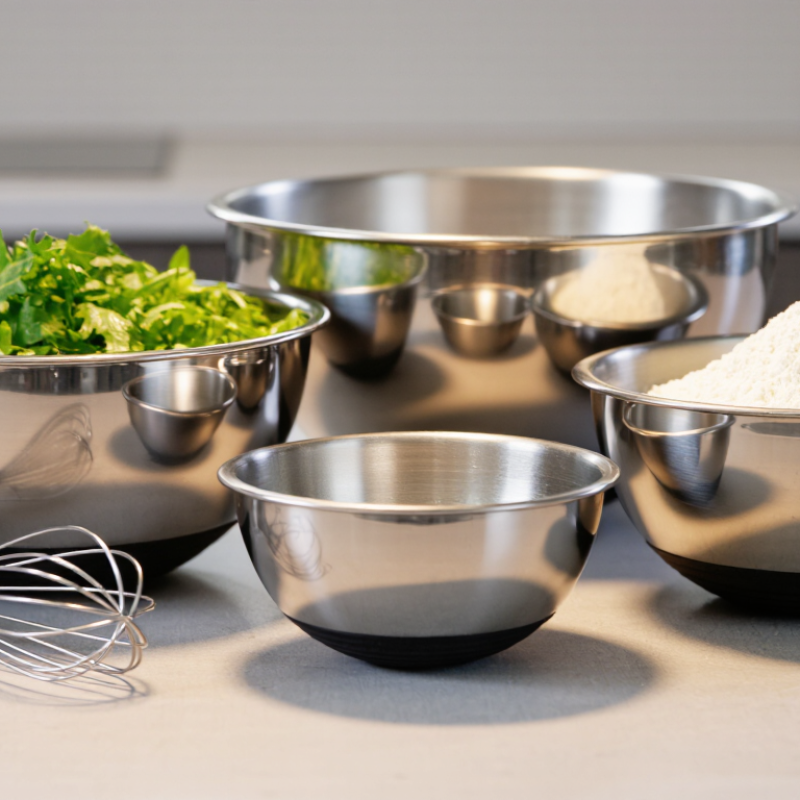
A stable mixing bowl should sit firmly on the counter when you whisk or fold ingredients. Look for a wide, flat base rather than a narrow one that rocks under pressure. A rubberized bottom can help, though it may make the bowl harder to nest with others. A little wobble matters. Try pressing the rim gently before buying, if you can.

Shape affects how ingredients move. A rounded interior helps a whisk reach the sides, while a slightly deeper bowl reduces splashes when beating cream. Very steep sides can make scraping awkward; I have found that a flexible spatula may still leave a thin layer behind. Useful details include a rolled rim for pouring, clear capacity markings, and nested sizes that separate easily. Check the weight, too: a very light bowl can slide, but a heavy one becomes tiring to lift when full. Not glamorous, but useful. Small design choices show up during ordinary tasks, especially when a bowl holds sticky dough or warm ingredients.

Checking Durability, Food Safety, and Ease of Cleaning

When checking durability, feel the bowl in your hands. A heavier bowl often stays steadier while whisking, though weight alone does not prove quality. Look for a smooth rim, even walls, and seams without sharp edges. A rolled rim is easier to grip and less likely to feel flimsy. Not always.

Check the steel description, too. Food-grade stainless steel is a sensible choice for everyday mixing, but labels such as 18/8 or 18/10 describe composition, not the bowl’s entire quality. Avoid bowls with peeling coatings, deep dents, or rough interior spots. Small surface scratches may appear with use; they are not automatically a safety problem. Still, replace a bowl if damage makes it hard to clean or leaves sharp edges.

For easier cleaning, choose a simple shape with a smooth interior and few creases where batter can collect. Rinse dried egg or dough soon after use, then wash with warm water and dish soap. A soft sponge usually removes residue without adding unnecessary scratches. Dry the bowl after washing, especially around the rim and base. Many stainless bowls are dishwasher-safe, but check the care instructions rather than assuming. I used to focus mostly on shine; in practice, a stable base and an easy-to-wash shape matter more often.

How to Choose the Best Stainless Steel Mixing Bowls: Durability, Food Safety, and Ease of Cleaning
Selection Factor What to Look For Why It Matters Practical Check
Stainless steel grade Clearly identified food-contact stainless steel, commonly 304 (often described as 18/8 or 18/10). 304 stainless steel is widely used for kitchen equipment and generally offers good resistance to corrosion from everyday food preparation. Check the product specifications for the steel grade; do not rely on appearance alone.
Corrosion resistance A smooth, intact surface without rust spots, pitting, or flaking. Salt, acidic ingredients, and prolonged moisture can contribute to corrosion, especially on lower-corrosion-resistance steel. Inspect the inside and rim. Rinse bowls after contact with salty or acidic mixtures and dry them if storing.
Construction and durability Even walls, a well-finished rim, and a base that sits steadily on a flat surface. Good construction helps bowls resist ordinary kitchen wear and makes them more comfortable to handle. Check for sharp edges, loose parts, visible dents, or wobbling. Avoid assuming that a heavier bowl is automatically better.
Food-contact information Product details that identify the material and state that the bowl is intended for food use. Clear material and use information helps shoppers assess whether the bowl is suitable for routine food preparation. Review the packaging or manufacturer’s care and material information before buying.
Ease of cleaning A smooth interior with few seams, crevices, or hard-to-reach joints. Smooth surfaces are easier to wash thoroughly and less likely to trap food residue. Look for a simple, seamless interior and confirm whether the care instructions allow dishwasher cleaning.
Dishwasher compatibility Care instructions that explicitly say the bowl is dishwasher-safe. Dishwasher suitability can depend on the product’s finish, construction, and any attached components. Follow the product instructions. Avoid chlorine bleach and harsh cleaners unless the care guidance specifically permits them.
Size and nesting A range of capacities suited to the tasks you do, with bowls that store neatly if space is limited. Different sizes are useful for whisking, mixing, tossing, and holding ingredients. Compare listed capacities and dimensions with your storage space and common recipes.
Stability and handling A comfortable rim and a shape that is easy to grip; a non-slip base can help keep a bowl steady. Stable handling makes mixing easier, especially when stirring thicker mixtures. Check whether the base is flat or fitted with a non-slip ring, and confirm whether any ring is removable for cleaning.
Overall choice Prioritize verified food-contact material, sound construction, and clear care instructions. No single feature guarantees the best bowl; material information, finish, usability, and maintenance all matter. Choose a size set and design that match your cooking habits and available storage.

Matching a Bowl Set to Your Kitchen Needs and Budget

Choosing a bowl set is less about owning every size and more about matching the bowls to your routine. If you often whisk eggs or mix pancake batter, a medium bowl with a stable, flat base may earn more use than an oversized set. For meal prep, check whether the bowls nest neatly and fit your cupboard. Small kitchens notice every inch. A rolled rim can make pouring easier, while a tight-fitting lid helps with storage. Still, lids and extra accessories can raise the price without adding much value.

Material labels deserve a closer look. The World Stainless Association’s 2023 production report recorded 58.4 million tonnes of stainless steel production worldwide. That scale shows how widely the material is used, but it does not prove that every bowl has the same quality. Check the stated steel grade, wall thickness, finish, and care instructions. A heavier bowl often feels steadier, though weight alone is not a quality test. For a tight budget, compare the cost per bowl and choose three useful sizes over a large set with pieces you rarely reach for. One detail is easy to overlook: very lightweight bowls can slide while whisking, especially on a slick counter.