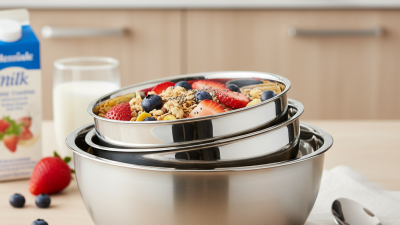
Inquiry
Form loading...

10 Best Stainless Steel Cooking Bowls for Every Kitchen

A good mixing bowl earns its place through everyday use. Stainless Steel Cooking Bowls can handle whisking eggs, tossing salad, and holding chopped vegetables without taking up much cupboard space. Their smooth, nonporous surfaces are generally easy to clean, and many models nest together for compact storage. But size, weight, rim shape, and stability vary more than product photos suggest.

This guide compares ten options for different kitchens and cooking habits. It considers practical details such as capacity, whether a base stays steady on the counter, and how comfortably a bowl pours. A wide, lightweight bowl may suit quick baking tasks, while a deeper, heavier one can feel more secure when mixing thick batter. Some sets include lids, which help with storage, though fit and sealing quality can differ. Small details matter.

Stainless steel is durable, but it is not automatically the best choice for every task. It can show scratches, and it will not work in a microwave. Also, a thin bowl may wobble during vigorous mixing; that is an easy drawback to overlook. The right pick depends on what you cook, how much storage you have, and whether you prefer individual bowls or a nested set. Here are ten useful choices, with their strengths and trade-offs made clear.
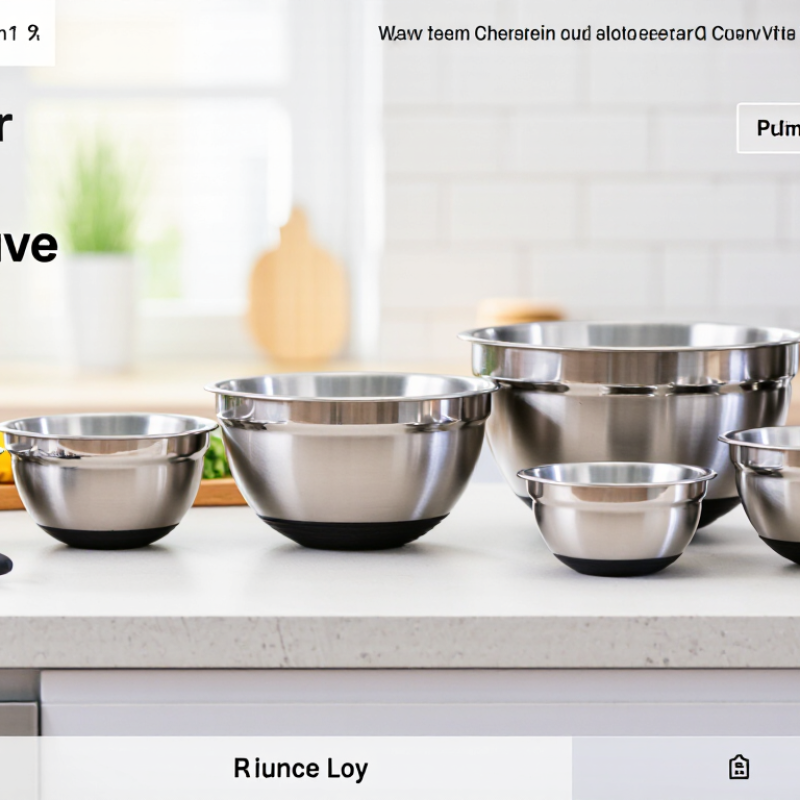
10 Best Stainless Steel Cooking Bowls for Every Kitchen

What Makes Stainless Steel Cooking Bowls Essential in Every Kitchen

Stainless steel cooking bowls are useful because they handle daily prep without demanding much care. They resist rust and staining when cleaned and dried properly, and they do not absorb strong odors from garlic or citrus. A bowl can hold chopped vegetables, beaten eggs, or a quick marinade. One tool, many jobs.

Their light weight makes them easy to lift while whisking, and nested shapes save cupboard space. The metal also transfers temperature quickly. Set a bowl over ice, and cream or chocolate cools faster; use it for warm ingredients, and the sides may heat your hands. Keep a towel nearby. It helps.

A stable base and a smooth interior make mixing less messy, especially when folding flour into batter. For safer handling, choose a size that leaves room for splashes and a rim you can grip comfortably. Stainless steel is not microwave-safe, and salty or acidic mixtures should not sit in it for long periods. Wash promptly, then dry to reduce water spots. I still reach for the wrong-sized bowl sometimes; having several sizes is practical, though it takes more shelf space.

10 Best Stainless Steel Cooking Bowls for Every Kitchen — What Makes Stainless Steel Cooking Bowls Essential in Every Kitchen

These are practical bowl-size profiles, not specific products. Capacities and rim diameters are approximate; actual dimensions vary by shape and manufacturer. For food-contact use, check the product specifications for the stainless-steel grade and care instructions.

Bowl Type Approx. Capacity Typical Rim Diameter Best For Useful Design Feature What to Check
Small prep bowl 0.5–1 qt (0.5–1 L) 5–7 in (13–18 cm) Measuring ingredients, holding chopped herbs, and mixing small portions Lightweight and easy to store in a kitchen drawer or nested bowl set Look for a stable base and a rim that is comfortable to grip.
Everyday mixing bowl 1.5–2 qt (1.4–1.9 L) 7–9 in (18–23 cm) Whisking eggs, mixing dressings, and preparing small batches A rounded interior helps a whisk or spatula reach the sides Check that the bowl is deep enough to reduce splashing while mixing.
Medium all-purpose bowl 3–4 qt (2.8–3.8 L) 9–11 in (23–28 cm) Mixing batters, tossing salads, and combining everyday ingredients A wide opening makes adding ingredients and scraping the sides easier Compare the bowl’s usable depth with your cupboard and dishwasher space.
Large batch-mixing bowl 5–6 qt (4.7–5.7 L) 11–13 in (28–33 cm) Preparing larger recipes, tossing vegetables, and mixing dough by hand A broad rim gives room to stir and fold ingredients A non-slip base can help keep a large bowl steady on the counter.
Extra-large serving and prep bowl 7–8 qt (6.6–7.6 L) 13–15 in (33–38 cm) Large salads, family-size batches, and marinating larger quantities High sides help contain ingredients during tossing Check its filled weight and storage footprint before choosing this size.
Deep whisking bowl 2–3 qt (1.9–2.8 L) 8–10 in (20–25 cm) Whipping cream, beating eggs, and vigorous hand mixing A narrower opening and deeper sides help limit splatter Confirm that the base sits securely when whisking by hand.
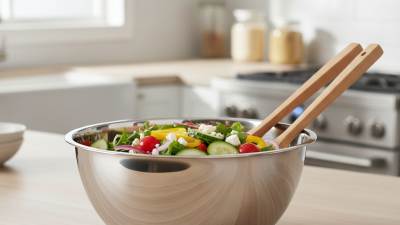
Wide salad-tossing bowl 4–6 qt (3.8–5.7 L) 11–14 in (28–36 cm) Tossing salads, coating vegetables, and combining ingredients gently A wide mouth leaves room for serving utensils and hands Choose a size that fits your refrigerator if you plan to chill food in it.
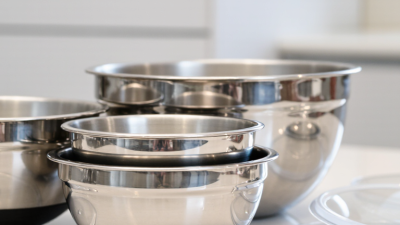
Compact nesting bowl 1–2 qt (0.9–1.9 L) 7–9 in (18–23 cm) Small kitchens, ingredient prep, and space-saving storage Designed to stack inside larger bowls Check that the set’s sizes nest without sticking together.
Pouring bowl with spout 1.5–3 qt (1.4–2.8 L) 8–10 in (20–25 cm) Pouring pancake batter, sauces, and whisked eggs A formed lip or spout helps direct liquids while pouring Check that the pouring edge works for both left- and right-handed use.
Lidded food-prep bowl 2–4 qt (1.9–3.8 L) 9–11 in (23–28 cm) Chilling prepared ingredients and storing leftovers A fitted lid can help cover contents during refrigerator storage Verify whether the lid is airtight and dishwasher-safe; these features vary.

Key Factors for Evaluating Stainless Steel Cooking Bowls

A useful cooking bowl should feel steady when whisking, not skate across the counter. Compare its weight and wall thickness: a very thin bowl is light and easy to store, but may flex under firm mixing. A heavier bowl feels more stable, though it takes up more room. There is a trade-off.

Check the rim and base. A rolled rim is easier to grip and pour from, while a broad, flat base helps the bowl sit securely. Smooth seams and a polished interior are practical details; rough joins can trap food and make cleaning tedious. Check the stated capacity against your usual tasks, too. A bowl that holds salad may be too small for tossing a double batch of dough.

Consider how the bowls nest and whether they fit your dishwasher and storage shelf. Stainless steel is durable, but it can show scratches and water spots with regular use. That is normal. Magnetic response alone is not a reliable measure of quality, since stainless-steel compositions vary. Look for clear material and care information, and choose a size range you will actually use. No set is perfect; an awkwardly large bowl can become shelf clutter.

Stainless Steel Cooking Bowls: A Key Material Factor

Typical thermal conductivity of common stainless steel grades at approximately 100°C. Higher conductivity means heat travels through the material more readily; bowl performance also depends on design and thickness.

Approximate values: Type 304, 16.2 W/(m·K); Type 316, 16.3 W/(m·K); Type 430, 26.1 W/(m·K). Values vary with composition and temperature; thermal conductivity alone does not determine bowl quality.

Ten Top Stainless Steel Bowl Options and Their Best Uses

Small stainless steel pinch bowls keep salt, chopped herbs, and measured spices within reach. Medium prep bowls suit diced vegetables or whisked eggs, while deep mixing bowls handle cake batter and bread dough with less splashing. Wide, shallow bowls make tossing salads easier, and heavy-base bowls stay steadier during vigorous whisking. Each shape has a job.

Nesting sets save cupboard space, though the smallest bowls can feel cramped for real prep. Spouted bowls help pour pancake batter or dressings neatly. Lidded bowls are useful for storing leftovers, but check that the lids fit securely. A perforated stainless steel colander drains rinsed berries and pasta. Double-wall bowls help keep chilled ingredients cool during serving, though they take up more room. For regular use, look for smooth seams and clear food-contact material details; stainless steel grades and construction can vary.

Tips: Match bowl size to the task, not just the cupboard. A roughly 3-quart bowl gives many home cooks room to whisk without splashing. Dry bowls after washing to reduce water spots, and avoid scraping delicate coatings with metal utensils.

How to Choose the Right Bowl Size, Shape, and Features

Choosing the right stainless steel bowl starts with the food you actually prepare. A one-quart bowl suits whisking two eggs or holding chopped herbs. For tossing salad or mixing cookie dough, a three- to five-quart bowl gives ingredients room to move. Very large bowls are useful for bread dough, but they can feel awkward when stored or lifted full. A nested set saves cabinet space, though its smallest bowl may be too shallow for vigorous whisking. Check capacity, not just the bowl’s width.

Shape matters more than it first seems. A rounded base helps a whisk reach the sides, while a flatter bottom sits steadily on the counter. A narrow, deep bowl can reduce splashes when using a hand mixer. But it may be harder to scrape clean. Look for a rolled rim that feels comfortable to grip, especially when carrying wet ingredients. Thin steel is lighter, yet it may wobble under a mixer. A heavier base feels steadier, though it adds weight.

Consider details you will use often. Measurement marks are handy, but they can be difficult to read once flour coats the inside. A nonslip base can help, although it may limit nesting. Stainless steel usually handles acidic ingredients well, but avoid leaving salty or acidic mixtures sitting for long periods. Check that the bowl is food-grade steel and dishwasher-safe if those features matter to your routine. Small trade-offs count. Even careful cooks sometimes buy a bowl that is just a little too small.

Proper Care, Cleaning, and Storage for Long-Term Use

Stainless steel cooking bowls are durable, but everyday habits affect how well they hold up. After use, rinse away salty or acidic foods rather than leaving them in the bowl for hours. Wash with warm water, mild dish soap, and a soft sponge. For dried batter or egg, soak the bowl briefly before wiping; scraping with a knife can leave visible marks. Dry them well.

For stubborn residue, try a paste of baking soda and water, rubbing gently with a non-scratch cloth. Rinse thoroughly so no powder remains, then towel-dry to reduce water spots. Avoid steel wool and harsh chlorine-based cleaners, which can scratch or damage the surface. Some bowls are dishwasher-safe, but check the care instructions for your specific bowl. A dishwasher’s heat can also leave spots when water is mineral-rich.

Store bowls completely dry. Nest them by size, placing a clean dish towel between pieces if they tend to clatter or show scuffs. Keep them away from damp sinks and strong-smelling cleaners. I sometimes leave a bowl to air-dry, then notice faint spots the next morning; a quick towel pass would have prevented them. Small habit, big difference.