Inquiry
Form loading...

China Best Stainless Steel Mixing Bowls for Wholesale Buyers

For wholesale buyers, Stainless Steel Mixing Bowls are judged by more than a polished finish. Capacity, rim strength, nesting fit, and consistent dimensions affect packing, storage, and everyday kitchen use. A bowl that looks bright under showroom lights may still arrive with a thin edge or a loose-fitting lid. Small details matter.

The World Stainless Association reported 58.4 million tonnes of global stainless-steel production in 2023, a useful measure of the material’s broad industrial supply—not a forecast for mixing-bowl sales. Buyers should still verify each supplier’s grade declarations, sample quality, and production tolerances. Ask for a physical sample. Check the base, seams, and rolled rim by hand. Not just the catalogue image.

I cannot responsibly attribute a verbatim statement to a named mixing-bowl expert without a verifiable source. That gap matters: a polished quotation is not evidence. For a dependable China sourcing decision, compare documented specifications with inspected samples, then confirm that bulk orders match the approved product. Price matters, of course. So does the bowl that reaches the buyer intact.
China Best Stainless Steel Mixing Bowls for Wholesale Buyers

What Stainless Steel Mixing Bowls Are and How They Are Used

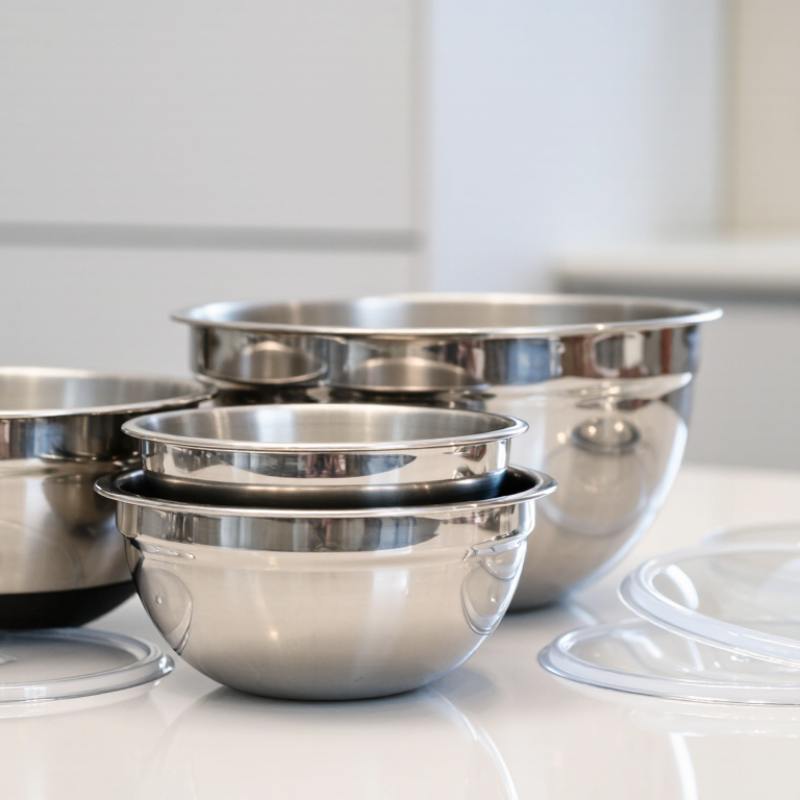
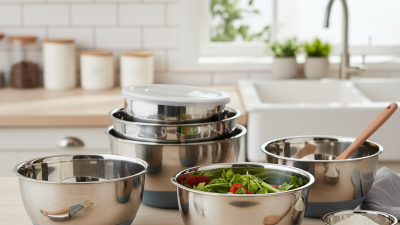
Stainless steel mixing bowls are reusable vessels made from corrosion-resistant steel. Their curved sides help ingredients move freely during whisking, folding, and tossing. A broad rim gives cooks a firm grip, while nested shapes save shelf space. Some models have flat bases; others wobble slightly on wet counters. That small detail matters during fast prep.

They handle tasks from beating eggs to holding chopped vegetables and marinating food. The nonporous surface is easy to clean and does not readily retain food odors. Bowls also tolerate repeated kitchen use, though thin metal can dent or feel unstable. “Stainless” does not mean indestructible. Wall thickness, rim finishing, and base shape affect everyday performance.

For wholesale buyers, these features help define a practical product range: light bowls for quick prep, deeper options for mixing, and larger sizes for batch work. The World Stainless Association reported 62.6 million tonnes of global stainless-steel production in 2024, up 7% from 2023. That figure describes the wider material industry, not bowl sales, but it shows the scale of stainless-steel supply. Buyers should still compare sample weight, finish, and nesting fit; catalogue dimensions alone can be misleading.

Materials and Construction of Stainless Steel Mixing Bowls

Stainless steel mixing bowls are often made from grades such as 304 or 201. The grade affects corrosion resistance, durability, and cost. Ask suppliers for the exact material specification rather than relying on “stainless steel” alone. Some grades may respond to a magnet; that does not, by itself, confirm quality.

Thickness matters. A heavier bowl may resist dents during repeated kitchen use, but it also costs more to ship and can feel cumbersome. There is no ideal gauge for every buyer. Check the rim, too. A smoothly rolled edge feels comfortable in the hand and is less likely to snag cloths during washing. Rough edges are a warning sign.

Many bowls are formed in one piece, while others have joined seams. Inspect seams for even finishing and residue-catching gaps. A satin surface can make light scratches less noticeable; a polished surface looks brighter but may show marks sooner. Look at the base. A broad, level bottom helps a bowl stay steady while whisking, and consistent sizing makes nested sets easier to pack. Small details count. Ask for samples, then test them with a whisk and a damp cloth before placing a large order.

China Best Stainless Steel Mixing Bowls for Wholesale Buyers - Materials and Construction of Stainless Steel Mixing Bowls

Material or construction detail Typical characteristics Potential wholesale use Buyer checks
304 stainless steel Commonly described as 18/8 stainless steel. It contains chromium and nickel; exact composition depends on the applicable grade specification. A widely used option for general food-preparation bowls where corrosion resistance and everyday durability are priorities. Request the stated grade and supporting material documentation. Confirm that the documentation applies to the supplied product.
201 stainless steel A chromium-manganese stainless steel with less nickel than 304 in common specifications. Corrosion performance depends on grade, finish, use, and care. May suit cost-sensitive product ranges when the intended environment and maintenance requirements are clearly understood. Verify the precise grade and test requirements; do not assume it performs identically to 304 in every environment.
430 stainless steel A ferritic stainless steel that is generally magnetic and typically has little or no intentional nickel. Its corrosion resistance differs from austenitic grades such as 304. A possible choice for selected designs or applications where its material characteristics meet the product requirements. Confirm suitability for the bowl’s food-contact use, cleaning conditions, and expected exposure to moisture or salts.
316 stainless steel Contains molybdenum in addition to chromium and nickel. Exact composition is determined by the specified grade; it is often selected for enhanced resistance in certain chloride-containing environments. Can be considered for specialist ranges where the added material properties justify the specification and cost. Ask for grade-specific evidence and assess the actual operating and cleaning environment before specifying it.
Single-wall formed body A bowl body shaped from sheet stainless steel. Forming method and wall thickness affect rigidity, weight, and finished dimensions. Common for lightweight kitchen bowls intended for mixing, serving, or food preparation. Specify dimensions, capacity, acceptable variation, wall thickness, and whether the bowl should nest with other sizes.
Rolled or reinforced rim A finished edge folded or shaped to improve handling and help stiffen the bowl opening. The edge profile varies by design. Useful where buyers want a more finished edge and a comfortable grip during routine handling. Inspect rim smoothness, consistency, and exposed edges on production samples.
Flat or formed base A flat base can help the bowl sit on a work surface; a formed base may add shape or rigidity. Stability depends on the complete design and surface. Important for preparation tasks where the bowl needs to rest steadily on a countertop. Check for rocking, unevenness, sharp transitions, and fit with any lids or accessories.
Brushed or polished finish Brushed finishes have a visible directional texture; polished finishes are smoother and more reflective. Finish affects appearance and can influence how visible scratches or marks are. Select according to the desired appearance, cleaning expectations, and position in the product range. Agree on finish samples and inspect for consistent appearance, burrs, stains, and surface defects.

Material composition and performance vary by grade, manufacturing, finish, and use. Confirm specifications, food-contact requirements, and applicable test documentation for the exact product before placing a wholesale order.

Common Bowl Types, Sizes, and Design Features

Wholesale buyers usually choose among deep mixing bowls, shallow prep bowls, and compact portion bowls. Deep sides help contain flour or whisked eggs, while shallow shapes make ingredients easier to reach. A rolled rim feels smoother in hand and can help with pouring. Check the steel grade, wall thickness, and finish together; a polished surface alone does not tell you how sturdy a bowl is.

Common sizes range from small bowls for sauces to large bowls for dough and batch mixing. A practical assortment should nest securely, with enough space between bowls for easy removal. Measure the rim diameter and usable capacity, not just the listed size. A deeper bowl is not always better; it may be awkward on a crowded worktop. Small details matter.

Tips: Test sample bowls with a whisk and a damp cloth. Check for wobble, sharp edges, and trapped water around the rim. Compare actual dimensions across samples. Even a clear specification can miss a detail.

Typical Mixing Bowl Capacities
This chart converts commonly offered nominal bowl sizes from US quarts to liters. Actual product ranges and usable capacity vary by manufacturer and bowl design; the values are unit conversions, not sales data.

How Wholesale Buyers Evaluate Bowl Quality and Value

Wholesale buyers should compare stainless steel mixing bowls by material traceability, wall thickness, finish, and usable capacity—not price alone. The World Stainless Association reported global stainless steel melt-shop production of 58.4 million tonnes in 2023, up 4.6% from 2022. That industry scale makes grade verification important: request material certificates and confirm whether bowls use food-contact-suitable stainless steel, such as 304, rather than relying on a seller’s description. A shiny surface proves little.

Inspect samples under ordinary kitchen lighting. Look for rolled rims without sharp edges, smooth interiors, stable bases, and nesting that does not jam when bowls are stacked. Check stated capacity with water; a bowl’s brim capacity may exceed its practical working volume.

Ask suppliers for thickness tolerances, carton dimensions, and replacement terms, then compare delivered cost per usable bowl. Small flaws matter. A wobbly base or rough seam can slow packing and cleaning.

Yet thickness alone is not a quality score; heavier bowls can cost more to ship and handle. I would test a small batch before committing, even when the paperwork looks complete. The data sheet rarely tells the whole story.

China’s Manufacturing, Sourcing, and Quality Control Process

China’s stainless steel mixing bowl supply chain brings together sheet-metal processors, forming workshops, polishing teams, and packing lines. For wholesale buyers, sourcing begins with a clear specification: steel grade, bowl capacity, rim shape, finish, and carton quantity. Ask suppliers to identify the material standard and provide traceable batch records where available. Details matter.

During production, flat steel is cut into blanks, pressed into shape, trimmed, and polished. Welded handles or bases need separate checks; many bowls are seamless, but construction varies by design. Request pre-production samples and compare dimensions, weight, and nesting fit against the approved sample. Looks can mislead.

Quality control should cover incoming material, in-process forming, and finished goods. Inspect for sharp edges, dents, uneven rims, polishing marks, and unstable bases, then test representative units for capacity and nesting. Confirm that packing protects rims during long-distance transport; crushed cartons can turn sound bowls into claims. No checklist catches everything. Keep inspection records, agree on defect limits before production, and consider independent inspections when order value or risk justifies them. Suppliers may miss a flaw, and buyers can overlook one too.