Inquiry
Form loading...
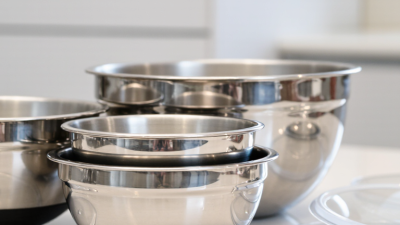
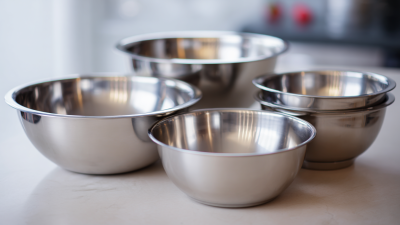
Stainless Steel Mixing Bowls earn their place through everyday jobs: whisking eggs, tossing salad, and holding dough while it rests. They are often lightweight, nest neatly, and resist staining, but quality varies. A thin bowl can skid across a counter. A rolled rim can feel rough. Small details matter.
The scale of stainless steel manufacturing offers useful context, though it does not tell us which bowl performs best. World Stainless reported global stainless-steel crude production of 58.4 million tonnes in 2023 in its Stainless Steel in Figures report. That figure describes the wider material industry, not kitchenware sales. Bowl-specific comparisons are limited, so shoppers should judge individual construction rather than assume every stainless bowl is equal. A practical shortlist should compare capacity, steel thickness, base stability, rim finish, nesting, and cleaning instructions. Check whether measurements refer to usable capacity; product listings can be vague.
This Top 10 guide focuses on those everyday differences. It considers bowls for quick whisking, larger batches, and compact storage, while noting trade-offs instead of promising a perfect pick. Not every kitchen needs a ten-piece set. A deep bowl may contain splashes better, yet feel awkward when mixing a small amount. That is worth remembering. Product descriptions and care guidance should be checked against the manufacturer’s own information, especially for dishwasher use or lids. A well-chosen bowl should feel steady under a whisk, stack without a struggle, and suit the cook’s actual routines. The best choice is practical—not merely shiny.
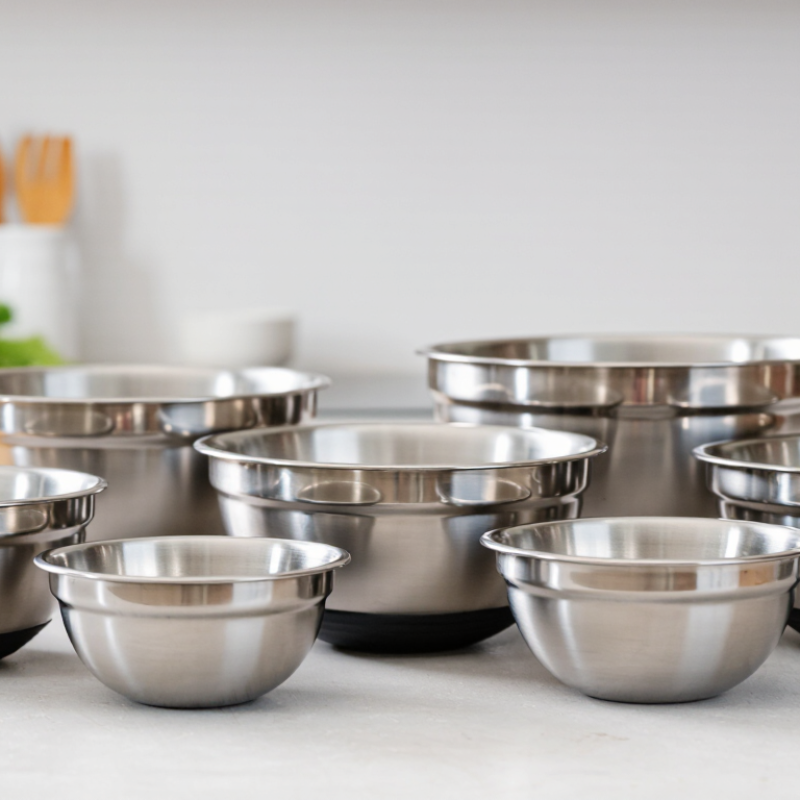
Stainless steel bowls may look alike, but alloy and construction shape how they perform. Type 304 is commonly described as 18/8 stainless steel, referring to its approximate chromium and nickel content, according to Nickel Institute technical guidance. Chromium helps form a protective surface layer; it does not make a bowl immune to scratches or poor care. World Stainless Association’s Stainless Steel in Figures 2024 reports 58.4 million tonnes of stainless steel production in 2023. That scale reflects a widely used material, not a quality ranking for individual bowls.
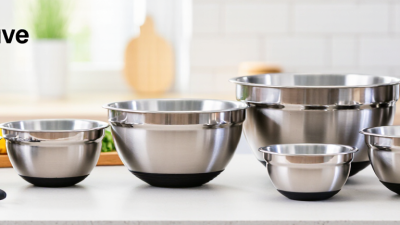
For everyday mixing, check whether the bowl is food-grade stainless steel and whether its finish feels smooth, with no sharp seams around the rim. A rolled rim is easier to grip when hands are wet. A flat, stable base helps when whisking eggs or stirring thick batter. Some bowls have a silicone-coated bottom, which can reduce sliding, though it may make cleaning less simple. Small details matter.
Wall thickness affects feel and resistance to dents, but thicker does not automatically mean better. Nesting bowls save cupboard space; graduated interiors help measure at a glance, though markings can be hard to read. I’ve found very lightweight bowls convenient to lift, yet they can skitter across a counter. Not always. Compare the finish, rim, and balance in your hands when possible.
A practical comparison of common stainless steel bowl designs. Capacity ranges are approximate; dimensions and features vary by maker and model.
| No. | Bowl Type | Typical Capacity | Material & Construction | Design Details | Best Suited To |
|---|---|---|---|---|---|
| 1 | Nested multi-size set | About 1–5 qt (0.95–4.7 L) | Usually thin-gauge stainless steel with a rolled rim; commonly sold as a set of three or more. | Graduated sizes fit inside one another to save cupboard space. | General meal preparation and kitchens with limited storage. |
| 2 | Deep-sided mixing bowl | About 3–8 qt (2.8–7.6 L) | Stainless steel body with relatively tall sides and a rounded interior. | Greater depth helps contain ingredients during whisking or tossing. | Whisking batters, tossing salads, and mixing larger portions. |
| 3 | Wide, shallow bowl | About 2–6 qt (1.9–5.7 L) | Stainless steel body with a broad opening and lower sidewall. | Wide surface makes ingredients easier to reach and spread out. | Cooling ingredients, coating foods, and hand-mixing dough. |
| 4 | Non-slip-base bowl | About 1.5–5 qt (1.4–4.7 L) | Stainless steel bowl with a separate silicone or rubber base ring. | The base adds grip on a work surface; it is generally removable for cleaning. | One-handed whisking and mixing on smooth countertops. |
| 5 | Pouring-lip bowl | About 1–4 qt (0.95–3.8 L) | Stainless steel body formed with a shaped rim or spout. | A defined pouring edge helps direct liquids and thin batters. | Pouring pancake batter, dressings, and other liquid mixtures. |
| 6 | Marked-measurement bowl | About 1–5 qt (0.95–4.7 L) | Stainless steel bowl with etched, stamped, or printed volume markings. | Interior or exterior graduations provide approximate volume references. | Combining measured ingredients and reducing the number of dishes used. |
| 7 | Lidded storage bowl | About 1–5 qt (0.95–4.7 L) | Stainless steel bowl paired with a separate fitted lid, commonly plastic or silicone. | The lid covers the contents for refrigerator storage; it is not necessarily airtight. | Chilling prepared ingredients or storing leftovers. |
| 8 | Heavy-gauge bowl | About 2–8 qt (1.9–7.6 L) | Thicker stainless steel construction than lightweight prep bowls. | Added material can make the bowl feel more stable, but also increases weight. | Frequent mixing and tasks that benefit from a sturdier bowl. |
| 9 | Brushed-finish bowl | About 1–8 qt (0.95–7.6 L) | Stainless steel with a fine, directional satin finish. | The matte surface has a subdued appearance and may show scratches less prominently than a mirror finish. | Everyday prep where a low-gloss finish is preferred. |
| 10 | Mirror-finish bowl | About 1–8 qt (0.95–7.6 L) | Stainless steel polished to a bright, reflective surface. | Smooth, glossy exterior; finish describes appearance rather than steel grade. | Serving, presentation, and kitchens that favor a polished look. |