Choosing the right Stainless Steel Tableware is less about a polished shine and more about what happens after hundreds of meals. A fork should feel balanced, a spoon should have smooth edges, and a plate should resist everyday scratches. World Stainless’s Stainless Steel in Figures 2024 reports 58.4 million tonnes of crude stainless steel production in 2023, showing the material’s broad industrial scale. But production volume alone cannot tell you whether a particular set is well made. That distinction matters.
A useful paraphrase of corrosion scientist Gerald S. Frankel’s published work is: “Corrosion resistance depends on the environment.” In practical terms, alloy grade, food exposure, cleaning habits, and manufacturing quality all affect performance. Check whether the grade is clearly stated, whether handles and joints feel sturdy, and whether the finish is even beneath bright shop lighting. “No grade is magic.” A higher nickel number is not a complete quality test, and attractive packaging proves little. I would also compare care instructions with your routine: a set needing careful handwashing may not suit a busy household. There is no perfect choice for every table. This guide weighs the details that labels often leave out, so you can choose tableware that fits your meals, budget, and willingness to maintain it.
Stainless steel is not one fixed recipe. Chromium helps form a thin, protective surface layer, while nickel supports corrosion resistance and toughness. ASTM A240/A240M’s composition tables specify 304 with 18–20% chromium and 8–10.5% nickel. Grade 316 contains 16–18% chromium, 10–14% nickel, and 2–3% molybdenum. These ranges matter more than a shiny finish. “18/8” is useful shorthand, but it does not replace a grade specification or material certificate.
For everyday tableware, 304 is a common choice; 316’s molybdenum can improve resistance to chloride exposure, such as salty food residue. It may be more than many kitchens need. There is no perfect shortcut. A magnet test cannot confirm a grade, since manufacturing can make some stainless steel magnetic. Check the product documentation for the stated grade and, where available, a material test certificate. ASTM’s figures describe chemical limits, not the quality of every finished spoon or plate. Surface finish, cleaning, and manufacturing matter too—a detail easy to overlook when comparing polished samples.

When comparing stainless steel tableware, check the grade, finish, and construction—not just the shine. ASTM A240/A240M specifies 18–20% chromium and 8–10.5% nickel for grade 304. Grade 316 contains 16–18% chromium, 10–14% nickel, and 2–3% molybdenum. That molybdenum can improve resistance to chloride-related corrosion, though it does not make tableware immune to damage. Details matter.
For everyday meals, grade 304 is often a practical choice. Grade 316 may suit frequent contact with salty foods or coastal conditions. Avoid leaving salt, acidic sauces, or damp food on the surface for long periods. Rinse promptly and dry with a soft cloth. Pitting around scratches or seams is a warning sign, not merely a cosmetic flaw. A mirror finish can look pristine while hiding thin construction; check weight and edge quality, too.
Food safety depends on cleanability as well as alloy. The U.S. FDA Food Code 2022, section 4-101.11, calls for food-contact surfaces to be smooth, durable, corrosion-resistant, and nonabsorbent. Choose pieces without rough seams or peeling coatings, and wash them according to care instructions. Stainless steel is not indestructible. Even careful buyers can overlook a poorly finished rim, so inspect pieces under good light before use.
When comparing stainless steel tableware, look beyond mirror shine. A gently curved spoon bowl can hold soup without awkward tilting, while rounded fork edges feel comfortable against the lips. Check where your fingers rest: smooth seams and a modest handle taper can reduce pressure during a long meal. Design should suit everyday food, not just a product photo. Try it with your usual dishes.
Weight is personal, but balance matters more than heaviness alone. Hold a fork at its midpoint and make a few cutting motions. It should feel steady, not nose-heavy or tiring. A lighter spoon may be easier for children or extended use, while a slightly heavier knife can feel more controlled. With damp hands, check whether the handles still feel secure. I once assumed heavier meant better; that was not true for every hand or meal. A quick try in a shop may also miss discomfort that appears after a week of use.
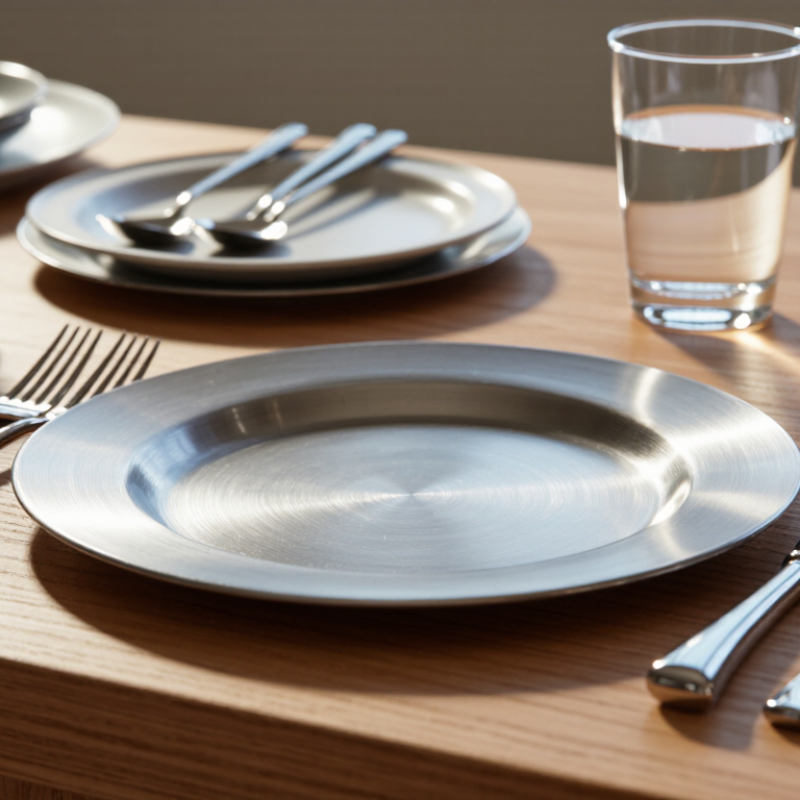
Inspect the surface under angled light. A good finish should look even, without pits, sharp burrs, or dark marks around seams. Satin finishes disguise small scratches; mirror finishes show fingerprints quickly. Check the rim and underside, too. Those spots are easy to miss. The World Stainless Association’s Stainless Steel in Figures 2024 reports 58.4 million tonnes of global stainless steel production in 2023. That figure shows the material’s scale, not a piece’s quality. ASTM A240/A240M lists Type 304 with 18–20% chromium and 8–10.5% nickel. Ask for grade details rather than relying on a shiny surface or a magnet test.
Construction affects daily use. Hold a piece by its handle and check that it feels firmly joined, with no loose parts or rough edges. Look for clear grade information and consistent thickness; very thin pieces may dent more easily. I would not treat one polished sample as proof that an entire set is well made. For care, wash with mild detergent, rinse, and dry to reduce water spots. Avoid steel wool and chlorine-based cleaners, which can scratch or pit stainless steel. Use a dishwasher only when the maker confirms the item is dishwasher-safe.
| What to Inspect | Common Options or Indicators | What It Means | Practical Buying Advice |
|---|---|---|---|
| Steel grade | 18/10, 18/8, or 18/0 | The figures generally refer to the approximate chromium and nickel percentages. 18/10 and 18/8 contain nickel; 18/0 contains little or no nickel and is often magnetic. | For everyday use, compare the stated grade and care instructions. Nickel content can improve corrosion resistance, but actual performance also depends on alloy quality, use, and care. |
| Finish | Mirror polish, satin, or brushed | Mirror finishes are smooth and reflective; satin and brushed finishes have a softer, less reflective appearance. Fine surface marks may be more noticeable on highly polished pieces. | Check for an even finish, smooth edges, and a comfortable feel. Choose a finish that suits your preferred appearance and willingness to wipe away fingerprints. |
| Construction | One-piece, stamped, or forged designs | Construction methods and shapes vary. Forged pieces are often heavier, while stamped pieces can be lighter; neither method alone guarantees better quality. | Hold a sample if possible. Look for a balanced feel, a secure connection between handle and head, and no sharp seams or rough edges. |
| Weight and balance | Lightweight, medium-weight, or heavier pieces | Weight affects how tableware feels in the hand, but does not by itself indicate steel grade or durability. | Choose a weight that feels comfortable for regular use. Check that forks, spoons, and knives feel reasonably consistent as a set. |
| Edges and details | Rounded edges, smooth tines, clean joints, and aligned patterns | Careful finishing improves comfort and helps avoid rough spots that can collect residue. | Inspect the fork tips, spoon bowls, knife edges, and handle joints. Avoid pieces with burrs, visible gaps, or uneven polishing. |
| Ease of care | Dishwasher-safe labeling and straightforward care guidance | Many stainless steel tableware items are dishwasher-safe, but manufacturer instructions should be followed. Prolonged contact with salt, acidic foods, or harsh chemicals may cause staining or corrosion. | Rinse off food residues promptly, use a suitable detergent, and dry pieces after washing to help reduce water spots and discoloration. |
| Set composition | Place settings, serving pieces, and replacement availability | Sets may differ in piece count and included utensils, so the advertised quantity does not always equal the number of complete place settings. | Confirm the exact pieces included, the number of settings, and whether individual replacement pieces can be purchased. |
Choose a set around the meals you actually serve, not the largest piece count on the shelf. A household that mainly eats at home may need dinner forks, teaspoons, and table knives, while frequent guests make serving spoons useful. Count the pieces you will use each week. A 48-piece set can look economical, yet include more small spoons than you need.
Compare the steel description, finish, and care instructions before comparing prices. Many sets use 18/10 stainless steel, which contains nickel and chromium and is valued for corrosion resistance; 18/0 contains chromium but no nickel. The label is useful, but it does not tell you everything about weight or balance. Hold a sample if possible. Does the handle feel comfortable, and does the fork sit evenly in your hand? Small details matter.
Set a total budget, then compare the cost per piece you will genuinely use. Check whether the set includes enough place settings and whether replacement pieces are sold separately. Dishwasher-safe cutlery can save time, but follow the maker’s care guidance; leaving damp pieces piled together may cause marks. A lower-priced set can be a sensible choice for occasional use, though thin handles may feel less substantial. I would not assume the heaviest set is automatically the best. Check the details.