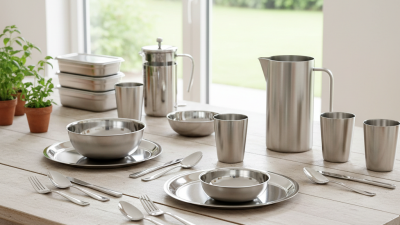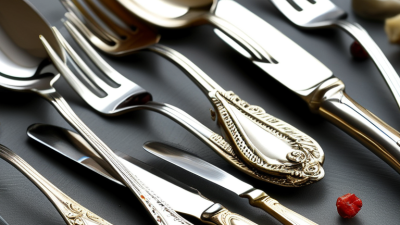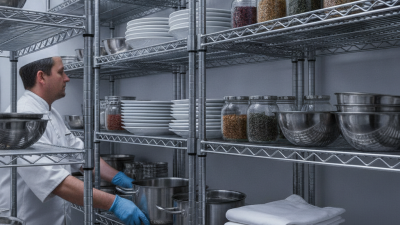
Choosing a Chinese manufacturer for Stainless Steel Tableware involves more than comparing prices or browsing polished catalogues. Buyers should examine steel grade, forming accuracy, surface finish, and the consistency of production batches. A spoon may look mirror-bright under showroom lights, yet show rough edges or uneven polishing when inspected closely. Small details matter.
As materials scientist Michael F. Ashby’s work on materials selection suggests, choosing a material means balancing performance, cost, and manufacturing needs. This is a paraphrase of his approach, not a direct quotation. For tableware buyers, that balance includes durability, corrosion resistance, food-contact suitability, and the intended use of each item. A manufacturer’s certificates can help, but they should be checked against the product and market in question.
This guide reviews leading Chinese manufacturers through practical criteria: product range, production capability, quality controls, export experience, and evidence buyers can verify. It also recognizes an uncomfortable point: public information may not reveal how consistently a factory performs across orders. That uncertainty deserves attention. The strongest shortlist is built from clear documentation, sample inspection, and direct questions—not reputation alone.
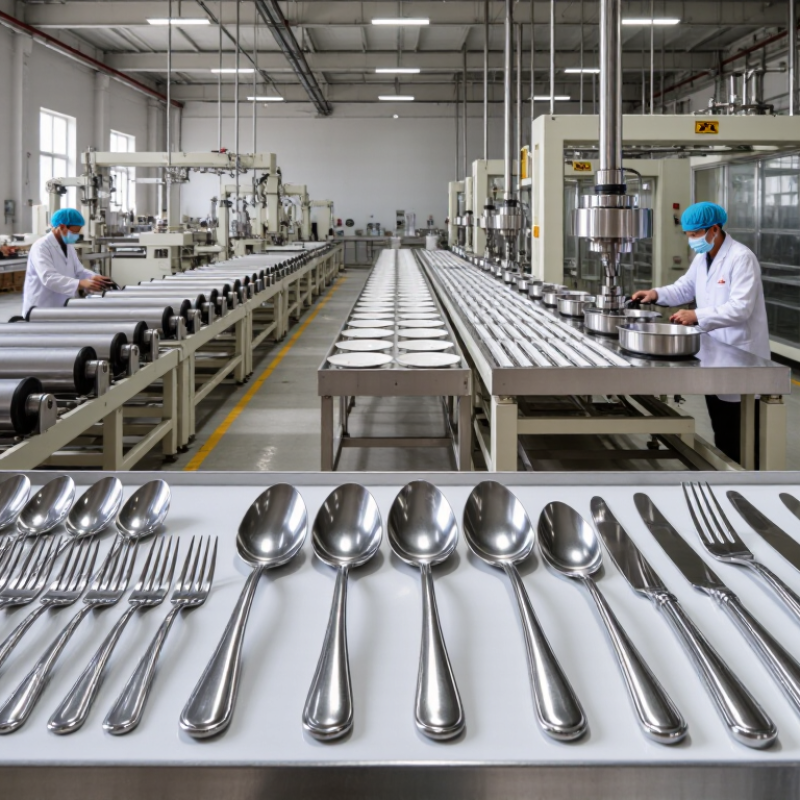
China’s stainless steel tableware industry combines large-scale metalworking with detailed finishing. Production clusters benefit from access to sheet steel, stamping equipment, polishing services, and export logistics. This concentration can shorten lead times, though quality still varies between factories. A shiny surface is not enough.
Manufacturers commonly form spoons, forks, knives, trays, and serving pieces through stamping, pressing, welding, and polishing. Food-contact products often use stainless steel grades such as 304 or 430, depending on the item and intended use. Buyers should check material declarations and test reports rather than rely on a grade printed in a catalogue. Small details matter: smooth rolled edges, consistent weight, and clean joints can reveal careful workmanship.
The sector serves domestic retailers, hospitality suppliers, and overseas importers with both standard patterns and custom designs. Large orders may support lower unit costs, while smaller runs can face higher setup charges. Samples help assess balance, surface finish, and how pieces feel in the hand. Ask about packaging, inspection steps, and batch traceability before production begins. Even then, occasional finish differences may appear. That deserves a closer look.

A material-composition comparison relevant to China’s stainless steel tableware industry. The values shown are representative midpoints of specified composition ranges; 430 nickel is shown at its maximum limit.
Composition values are percentages by mass, based on ASTM A240/A240M specifications. Actual product composition can vary within the specified limits.
China’s scale makes supplier screening important, but production volume alone does not prove tableware quality. The International Stainless Steel Forum’s Stainless Steel in Figures 2024 reports that China produced about 36.7 million tonnes of stainless steel in 2023, roughly 62.6% of global output. This industry figure provides context, not a ranking of tableware factories.
Ask manufacturers for material certificates that identify the steel grade and verify them against samples or independent testing. Check whether certificates match the actual batch, not just a polished sales brochure. Details matter.
Inspect the production floor, too. Look for clean forming and polishing areas, consistent edge finishing, and clearly separated inspection and packing stations. Request recent test records for corrosion resistance, food-contact suitability, and dimensional consistency, then confirm the test methods and laboratory.
A factory’s quality system certificate is useful, but it does not guarantee every spoon or tray will meet your requirements. Ask for production samples from a regular batch, not only hand-finished display pieces. Also compare defect handling, traceability, lead times, and packaging protection.
One awkward question is worth asking: what happens when a batch fails inspection? Specific, documented answers often reveal more than a low quote.
Notable stainless steel tableware manufacturers in China are often distinguished by process control, rather than polished catalogues alone. Look for consistent sheet thickness, smooth rolled edges, and handles that feel balanced in the hand. These details affect durability and daily comfort. Manufacturers serving export buyers may also provide material certificates, product specifications, and batch inspection records. Ask for them. A sample can reveal more than a brochure, though one sample cannot prove every production run is consistent.
Industry figures offer useful context, but not a direct ranking of tableware suppliers. The World Stainless Association reported that China produced about 36.7 million tonnes of crude stainless steel in 2023, roughly 62% of global output. This scale supports a broad manufacturing base, but does not guarantee tableware quality. Buyers should check steel grade declarations, weld finishing, polishing uniformity, and packaging protection. A reasonable comparison also includes lead times and defect-handling procedures. I would not treat production capacity as a quality score; that shortcut is tempting, and often wrong. The association’s production data describes stainless steel output, not finished tableware.
China’s stainless steel tableware manufacturers serve restaurants, hotels, retailers, and food-service distributors. Their product ranges commonly include dinner plates, bowls, serving trays, cutlery, and cookware. Buyers can compare steel grades, surface finishes, thickness, and available sizes. These details affect durability, appearance, and cost. A polished finish looks bright under dining-room lights, while brushed surfaces can make minor marks less noticeable.
Manufacturing capabilities vary between factories. Some handle stamping, deep drawing, polishing, and packaging in one facility; others rely on outside suppliers for certain steps. Ask how samples are checked and whether production measurements are recorded. For large orders, request a sample set and inspect the rim, weight, finish, and fit. Small inconsistencies matter. A plate that wobbles on a flat counter is easy to overlook in a catalogue, but frustrating in daily use. Capability claims should be checked against actual samples and documented specifications.
Tips: Specify the intended use, target thickness, finish, order quantity, and packaging before requesting a quote. Ask for clear product drawings and sample approval. If timelines seem unusually short, clarify which production stages are included. Even experienced buyers can miss a detail. That is worth admitting—and checking.
Choosing a Chinese stainless steel tableware manufacturer requires more than comparing unit prices. Ask about the steel grade, material traceability, and polishing process. Request a sample and inspect its weight, edge smoothness, and finish under bright light. A spoon should feel balanced, not sharp or uneven. Small details matter.
Production capacity also deserves a close look. Confirm typical lead times, minimum order quantities, and how the factory handles defects. Ask for recent inspection records and clarify whether checks happen during production or only before shipment. A clean showroom is reassuring, but it cannot prove consistent quality. Verify claims with documents and sample testing where practical. Do not rely on photos alone.
Communication is part of the product. Send a clear specification sheet with dimensions, finish, packaging, and acceptable tolerances. Notice how quickly the supplier answers specific questions. Vague replies may signal avoidable friction later. Price matters, of course, yet a lower quote can hide thinner material or weaker packaging. I would still compare the full landed cost; it is easy to overlook freight or replacement delays. No checklist removes every risk. A trial order can reveal problems that a polished presentation misses.
| Selection Factor | What to Check | Useful Evidence or Questions | Why It Matters |
|---|---|---|---|
| Stainless Steel Grade | Confirm the steel grade used for each product and component, such as food-contact surfaces, handles, and fasteners. | Request material specifications and, where appropriate, a material test report. Check that the documented grade matches the purchase specification. | Steel composition affects corrosion resistance, durability, and suitability for the intended use. |
| Food-Contact Compliance | Check the requirements for the destination market and the particular product category. | Ask for relevant declarations, test reports, and details of the testing laboratory. Verify that documents cover the materials and products being ordered. | Food-contact rules differ by market and may apply to materials, coatings, or specific product uses. |
| Manufacturing Capability | Assess experience with the required product types and processes, such as stamping, forming, polishing, and assembly. | Ask which production steps are performed in-house, what processes are outsourced, and how production capacity is planned for the order. | Process capability can influence product consistency, lead times, and control over outsourced work. |
| Quality Control | Review checks for incoming materials, in-process production, and finished goods. | Request the inspection plan, acceptance criteria, defect-handling process, and sample inspection records where available. | Documented checks help identify defects and maintain consistency across production batches. |
| Product Finish and Construction | Specify surface finish, edge treatment, thickness, dimensions, joining methods, and any coating or decoration. | Approve a production sample against written specifications. Check for sharp edges, uneven surfaces, and visible finishing defects. | Clear specifications and sample approval reduce ambiguity about appearance and construction. |
| Customization and Tooling | Confirm whether the manufacturer can support custom dimensions, designs, packaging, or decoration. | Ask about tooling ownership, tooling charges, sample development, revision procedures, and minimum order quantities. | These terms affect development costs, order flexibility, and the ability to reproduce a design consistently. |
| Order Terms and Lead Time | Clarify minimum order quantities, production schedules, payment milestones, and the definition of the quoted lead time. | Request a written quotation that separates product cost, tooling, packaging, sampling, and shipping terms. | Transparent terms make quotations easier to compare and help buyers plan procurement. |
| Packaging and Shipping Readiness | Check product protection, carton specifications, labeling needs, and preparation for the selected shipping method. | Request packaging samples or specifications and confirm carton dimensions, quantities, and required shipping marks. | Suitable packaging can reduce transit damage and support efficient handling and receiving. |
| Communication and Documentation | Evaluate responsiveness, clarity, and willingness to document specifications and changes. | Keep approved drawings, samples, inspection criteria, and order changes in written records. | Clear records help prevent misunderstandings during sampling, production, and delivery. |