7 Tips for Buying Stainless Steel Snack Bowls
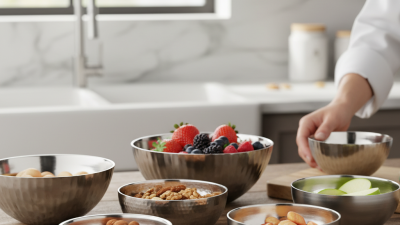
Choosing Stainless Steel Snack Bowls is about more than picking a polished finish. A good bowl should feel steady in your hand, sit flat on the table, and suit the food you actually serve. Think of sliced apples after school, warm popcorn during a film, or nuts set out for guests. Those small details make size, weight, and shape matter.
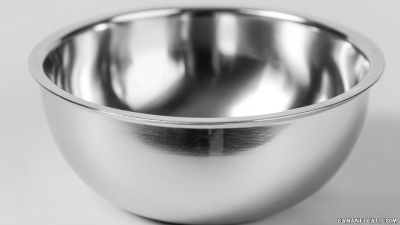
Materials scientist Michael F. Ashby is known for his work on selecting materials for practical applications. A useful buying principle, inspired by that approach, is: “Choose the bowl for the job, not just for its shine.” This is an editorial summary, not a direct quotation. It points to a common mistake: buying by appearance alone. Check the steel grade when the seller provides it, inspect the rim for smoothness, and look for a base that will not wobble on a countertop. A mirror finish can look elegant, but fingerprints may show quickly. Brushed steel can be easier to live with. Small trade-offs matter.
This guide covers seven practical tips for comparing Stainless Steel Snack Bowls, from capacity and construction to cleaning and value. Some listings leave out useful details, so pause before treating a product description as proof of quality. A bowl may look sturdy in a photograph and still feel thin in person. If possible, compare its dimensions with a bowl you already use. That simple check is easy to overlook—and worth doing.
Identify Your Serving Needs and Typical Snack Portions
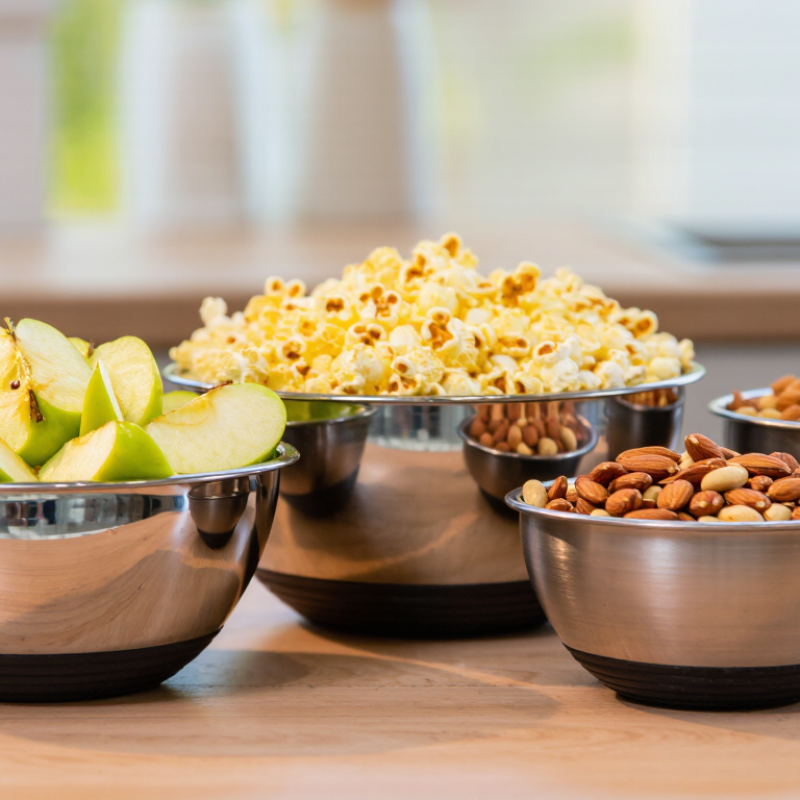
Before choosing stainless steel snack bowls, picture how they will be used on an ordinary day. A bowl beside the sofa may hold a small handful of nuts, while one on a party table might serve several guests. Think about who eats the snacks, how often you refill them, and whether people will share. A little planning helps prevent bowls that look attractive but feel awkward in use.
Estimate portions with the snacks you actually serve. For sliced fruit or crackers, spread a usual serving on a plate, then compare its volume with a bowl at home. Nuts and dried fruit pack closely, so a smaller bowl can hold more than expected. For shared snacks, choose enough capacity to reduce constant refills, but avoid a deep, oversized bowl that hides the food. That detail matters. Guests may take less when they cannot see what remains.
Serving needs can change during the week. Individual bowls make portioning simple for children or desk snacks, while a few larger bowls suit casual gatherings. Check the dimensions, not just the listed capacity; a wide, shallow bowl is easier to reach into than a narrow one. I would still leave room for error. Portions vary, and my own estimates are often generous when guests arrive. A sample bowl filled with your usual snack gives a more dependable reference than guessing from a product photo.
Check Stainless Steel Grade, Finish, and Food-Safe Materials
Start with the grade, not the shine. For everyday snack bowls, 304 stainless steel is a common choice because it resists rust and suits routine food contact. Look for a clearly stated grade and supplier documentation describing food-contact suitability; vague phrases such as “premium steel” tell you little. 316 contains molybdenum and can resist salty or acidic conditions better. That added protection may be unnecessary for crackers or fruit. Check your actual use. A magnet is not a reliable grade test: some stainless bowls show mild magnetism after forming.
Finish matters, too. Run a clean fingertip around the rim and inspect the inside under bright light. A smooth, even surface is easier to wash; pits, rough seams, or sharp edges can trap residue or irritate fingers. Mirror polish looks appealing, but it does not prove the steel is safer. Brushed finishes hide small scratches better, though they may need extra attention during cleaning. Looks can mislead. Check that coatings or decorative inserts are identified as suitable for food contact, especially where they touch snacks. Ask for care instructions, and avoid bowls with flaking surfaces or hard-to-reach seams. I would still inspect each bowl: a good grade cannot make up for a damaged rim or poor construction.
7 Tips for Buying Stainless Steel Snack Bowls
Tip 1: Check the stainless steel grade. Compare the chromium and nickel composition ranges below; these are useful clues when checking a product’s material specification.
Ranges shown are common composition limits for these grades under ASTM A240/A240M; limits can vary by product standard. Ask the seller to confirm the grade and that all food-contact surfaces are made from food-safe materials. Also inspect the finish for smoothness, check for clear care instructions, and choose a bowl size and shape that suits your needs.
Choose Bowl Sizes, Shapes, and Stackable Designs
Tip: Match capacity to the snack and the number of people eating. A 4- to 5-inch bowl works well for berries, nuts, or sliced vegetables. For popcorn or shared crackers, a wider bowl around 6 to 8 inches is easier to reach into. Check the listed capacity too; diameter alone can be misleading. Sizes vary.
Tip: Choose shapes based on how the bowl will be used. Shallow, wide bowls make small snacks easy to see and grab. Deeper bowls help keep grapes or cereal from spilling during serving. Rounded interiors are generally simple to wash, while sharp corners may hold crumbs. That matters.
Tip: Look for bowls with rims and bases that nest securely. Stack a few in the store, if possible, and check whether they wobble or stick together. A stable stack saves cupboard space and is easier to lift. Still, the tightest-fitting set is not always the most practical; bowls should separate without a struggle. Check that the sizes you need remain easy to access when stacked.
7 Tips for Buying Stainless Steel Snack Bowls — Choose Bowl Sizes, Shapes, and Stackable Designs
| Tip |
What to Look For |
Useful Size or Shape |
Why It Matters |
Check Before Buying |
| 1 |
Match capacity to the snack |
About 250–400 ml for a small individual portion; about 500–750 ml for a larger serving. |
A bowl that suits the portion is easier to handle and helps keep snacks together. |
Check the stated capacity and compare it with the portions you usually serve. Capacity can vary by bowl depth and shape. |
| 2 |
Choose a practical diameter |
A wider, shallow bowl works well for chips or cut fruit; a narrower, deeper bowl can suit nuts or small snacks. |
The opening affects how easily you can reach the food and how much counter or table space the bowl uses. |
Look for the bowl's dimensions, especially the top diameter and height, rather than relying on a size label alone. |
| 3 |
Consider a stable base |
A flat, broad base is a useful choice for everyday serving. |
A stable base is less likely to tip during normal use, particularly when a bowl is passed around a table. |
Check product images or measurements for the base width. A very narrow base may be less steady on an uneven surface. |
| 4 |
Inspect the rim and finish |
Smooth, even edges and a consistent interior finish. |
A neatly finished rim is more comfortable to handle and easier to wipe clean. |
Review close-up photos and care instructions. Avoid bowls with visible rough edges, dents, or damaged finishes. |
| 5 |
Look for stackable designs |
Nested bowls with a tapered profile and enough clearance between each bowl. |
Stacking can reduce cupboard space used when bowls are stored together. |
Check the listed stacked height and whether the bowls are designed to nest without sticking together. |
| 6 |
Compare material details |
Look for clear information identifying the bowl as stainless steel and describing its construction. |
Material and construction details help you compare durability and intended use across products. |
Check the product specifications and care guidance. Do not assume a bowl is suitable for every appliance or use. |
| 7 |
Choose a useful set mix |
A set with several complementary capacities can cover individual snacks and shared servings. |
Different sizes offer flexibility without requiring a separate bowl for every snack. |
Confirm the number of bowls, the capacity of each one, and whether the listed dimensions refer to the inside or outside. |
Buying note: Capacity ranges are general shopping examples, not fixed standards. Always compare the manufacturer's stated measurements with your storage space and serving needs.
Inspect Rim, Base, and Overall Construction Quality
A stainless steel snack bowl should feel steady before you even put food in it.
Run a clean finger around the rim. It should be smooth, with no sharp burrs, folded edges, or spots that catch a cloth. Look closely. A neatly rolled rim is usually more comfortable to hold and less likely to bend during ordinary use. Check the inside and outside under good light; rough patches, deep scratches, or uneven seams can trap residue and make cleaning harder.
Set the bowl on a flat counter and press lightly near opposite sides. A noticeable wobble may point to an uneven base, though a soft or sloped surface can mislead you. Feel the bottom: it should sit flat, without dents or thin, sharp edges. Compare the bowl’s weight and stiffness with its size. Very thin steel can flex when filled, while a heavier bowl is not automatically better made. Inspect the joins and finish for gaps, rough welds, or discoloration. These details matter more than a polished shine. A magnet test alone cannot confirm the steel grade, so don’t treat it as proof. I’ve found that quick checks miss small flaws sometimes; take another look after washing, when water can reveal seams or spots you didn’t notice.
Compare Cleaning Needs, Durability, and Price
Check the stated steel grade and finish, but treat specifications as a starting point. A smooth, polished interior usually releases sticky snacks more easily than a rough surface. Look closely at the rim and any seams; crumbs can collect in narrow joins. Small detail, big difference. Avoid relying on a magnet to identify steel quality, since magnetic response alone does not confirm a bowl’s grade.
Compare cleaning instructions before buying. A dishwasher-safe bowl may save effort, but hand-washing is simple when the shape has no tight corners. Check whether the bowl nests neatly with others, too; awkward stacks waste cupboard space and can scratch finishes. For durability, compare wall thickness and rim stiffness. A very light bowl can dent when dropped, while a heavier one may feel cumbersome for children. Consider how you will use it.
Then compare price against expected use, not just the shelf tag. A low-cost set may suit occasional snacks, while frequent use can make sturdier construction worth paying for. Check what the listed price includes, such as lids or multiple sizes, and read care details rather than assuming every finish handles the same treatment. It is easy to overvalue weight as a sign of quality; I would compare fit, finish, and cleaning effort together. No option wins every test.