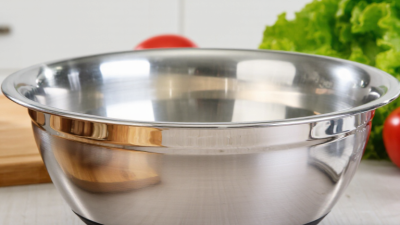
Choosing a China-based supplier for Stainless Steel Snack Bowls requires more than comparing catalog prices. Buyers must examine material grades, wall thickness, polishing quality, weld consistency, packaging, and delivery records. A bright bowl may still hide weak edges or uneven forming.
The International Stainless Steel Forum reported global crude stainless steel production of approximately 58.4 million tonnes in 2023. China remained the dominant producing region. This scale supports competitive sourcing, but it also creates uneven supplier quality. Grand View Research identifies food-contact applications as an important stainless steel market segment, driven by durability, hygiene, and recyclability. These findings support stainless steel’s commercial value, not every factory’s credibility.
Edwin Basson, former Director General of World Stainless, said, “Stainless steel is a sustainable material because it is 100% recyclable.” That statement matters for reusable snack bowls, especially in cafés, schools, hotels, and household kitchens. However, recyclability alone cannot prove product safety or performance. Buyers should request food-contact test reports, grade certificates, sample inspections, and factory audit evidence. Grade 304 is widely selected for everyday food applications, while 316 may suit more demanding environments. The better choice depends on actual exposure, not marketing language.
A reliable China supplier should explain tolerances clearly. Ask about rim smoothness, magnetic response, odor retention, and dishwasher testing. Small details matter. One overlooked sharp edge can damage the user experience. Price remains important, but the cheapest quotation may become the most expensive decision. This guide examines supplier capability with practical evidence, while recognizing that published market data cannot replace hands-on inspection.

A top supplier offers more than polished bowls and attractive quotations. It controls material selection, forming accuracy, hygiene, and delivery consistency. World Stainless reported 58.4 million tonnes of global stainless steel production in 2023. China remained the largest producing region. This scale creates strong manufacturing capacity, but capacity alone proves little.
Reliable suppliers identify each bowl’s steel grade and thickness before production. Common food-contact options include 304 stainless steel, while harsher environments may require 316. A magnet test is not enough. Professional buyers should request material certificates, chemical composition records, and third-party testing. China’s GB 4806.9-2016 standard covers metal food-contact materials and products. Suppliers should understand it, not merely mention it.
Surface inspection should check pinholes, sharp rims, weld marks, and trapped polishing compound.
Factory experience appears in small details. Sample bowls should stack evenly, resist tipping, and maintain smooth edges after repeated washing. A useful audit reviews incoming-material logs, calibration records, batch coding, and corrective-action reports.
The ISO Survey 2022 recorded more than 26,000 ISO 9001 certificates in China, showing broad quality-system adoption. Certification still does not guarantee careful production. I have seen attractive samples hide inconsistent wall thickness in later batches. That weakness deserves attention. Ask for independent inspection before shipment, especially when order quantities increase. Supplier communication also matters: clear drawings, approved samples, packaging tests, and written tolerance limits reduce avoidable disputes.
China Top Stainless Steel Snack Bowls Supplier?
Material selection decides whether a snack bowl stays bright after daily washing. Food-contact bowls commonly use 304 stainless steel, containing roughly 18–20% chromium and 8–10.5% nickel under EN 10088-1. This alloy resists moisture and ordinary food acids well. For salty or highly acidic snacks, 316 stainless steel offers better resistance because it includes molybdenum. It also costs more. A mirror finish can look premium, but appearance alone proves little.
Reliable suppliers should provide material certificates, batch traceability, and thickness records. The 2022 FDA Food Code requires food-contact surfaces to be corrosion-resistant, smooth, nonabsorbent, and easily cleanable. NSF/ANSI 51 also addresses materials and finishes used in commercial food equipment. These standards make weld quality important. Rough seams can trap oil and crumbs. Suppliers should inspect edges, welds, polishing marks, and dimensional stability after forming. ASTM A240 supports sheet and plate specifications, but it does not certify the finished bowl by itself.
Practical testing still matters. Check samples with salty water, repeated washing, and close visual inspection. Some defects appear only after use. That is easy to overlook. A supplier may report “304 stainless” without proving the actual batch. Request X-ray fluorescence testing when order volume justifies it. Also review packaging, because scratched surfaces can start corrosion earlier. Quality control is never perfectly simple; even experienced buyers should challenge attractive finishes and incomplete paperwork.
China Top Stainless Steel Snack Bowls Supplier?
Main Types, Sizes, and Designs of Snack Bowls Available
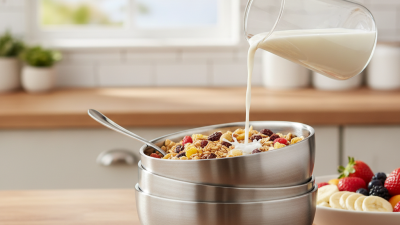
Stainless steel snack bowls usually come in round, square, divided, and nesting styles. Common capacities range from 250 to 700 milliliters. Small 250-milliliter bowls suit nuts, sauces, or sliced fruit. Larger 500-milliliter models hold popcorn, cereal, or shared snacks. Compact nesting sets save shelf space in cafés and home kitchens. Brushed surfaces hide fingerprints better than mirror-polished finishes. Hammered textures add visual interest, but they may be harder to clean.
Material selection matters. The International Stainless Steel Forum reported global stainless steel crude production at about 58.4 million tonnes in 2023. That scale supports stable material access, but quality still differs between suppliers. Grand View Research valued the global stainless steel market at approximately 111.4 billion dollars in 2022. Its report also projected strong growth through 2030. In practical sourcing, food-contact documentation, wall thickness, edge finishing, and welding quality deserve careful review. A bowl can look excellent and still feel weak.
Tips: Request samples in two sizes. Test stacking, rim comfort, surface scratches, and dishwasher performance. For daily commercial use, 304 stainless steel is often selected for balanced corrosion resistance. However, I would not treat it as an automatic guarantee. Confirm the actual grade, test method, and destination-market requirements. Divided bowls work well for mixed snacks, while simple round designs usually offer easier cleaning and broader use.
| Bowl Type | Typical Size (Diameter × Height) |
Approx. Capacity | Common Stainless Steel | Surface Finish | Design Features | Typical Uses | Stackable |
|---|---|---|---|---|---|---|---|
| Mini Tasting Bowl | 7–9 cm × 3–4 cm | 80–150 ml | 304 stainless steel | Polished or satin brushed | Lightweight body, rounded rim, compact footprint | Samples, nuts, sauces, toppings | Yes |
| Individual Snack Bowl | 10–13 cm × 4–6 cm | 250–500 ml | 201 or 304 stainless steel | Mirror polished, brushed, or powder coated | Moderate depth, smooth rolled edge, easy-grip profile | Popcorn, chips, fruit, desserts | Yes |
| Deep Serving Bowl | 14–18 cm × 6–9 cm | 700–1,500 ml | 304 stainless steel | Satin brushed or mirror polished | Deep walls, stable base, greater spill resistance | Family snacks, salads, mixed nuts | Usually |
| Divided Snack Bowl | 18–24 cm × 4–6 cm | 600–1,200 ml total | 304 stainless steel | Brushed or polished | Two to four compartments for separating foods | Snack assortments, appetizers, party service | Limited |
| Footed Snack Bowl | 12–16 cm × 7–11 cm | 400–900 ml | 304 stainless steel | Mirror polished or decorative brushed | Raised pedestal, presentation-focused silhouette | Buffets, catering, dessert presentation | Limited |
| Nesting Bowl Set | 10–23 cm × 4–10 cm | 250–2,000 ml per set range | 201 or 304 stainless steel | Brushed, polished, or satin finish | Graduated diameters, space-saving nesting design | Home kitchens, catering, food preparation | Yes |
| Lidded Snack Bowl | 12–18 cm × 5–9 cm | 500–1,500 ml | 304 stainless steel | Brushed steel with stainless or food-grade plastic lid | Snap-fit or press-fit lid, convenient storage and transport | Travel snacks, lunch service, refrigerator storage | Usually |
| Insulated Snack Bowl | 12–18 cm × 7–12 cm | 500–1,500 ml | Double-wall 304 stainless steel | Brushed, polished, or colored exterior | Double-wall construction, reduced condensation, improved temperature retention | Outdoor dining, catering, chilled snacks | Limited |
| Pet Snack Bowl | 13–22 cm × 4–9 cm | 500–2,000 ml | 304 stainless steel | Polished interior with brushed or coated exterior | Wide opening, non-slip base option, easy-clean interior | Pet treats, dry food, water | Some models |
| Commercial Portion Bowl | 14–20 cm × 5–8 cm | 700–1,800 ml | 304 stainless steel | Satin brushed or mirror polished | Reinforced rim, durable base, designed for repeated service | Restaurants, hotels, cafeterias, catering | Yes |
Note: Dimensions and capacities are common production ranges. Actual specifications may vary according to wall thickness, rim construction, base design, forming method, and customization requirements.
China Top Stainless Steel Snack Bowls Supplier?
How Chinese Suppliers Manage Customization and Production
Reliable Chinese stainless steel bowl suppliers usually begin with a clear product brief. Buyers specify diameter, depth, steel grade, wall thickness, finish, packaging, and target quantity. Experienced production teams then review drawings before quoting. This step prevents costly misunderstandings. A sample follows. It may include a logo, colored rim, engraved measurement marks, or a special stacking shape.
The first sample is rarely perfect. A slight edge curve can affect stacking. A polished surface may show fingerprints under warehouse lighting. Good suppliers record these details and revise the tooling or finishing process. They also confirm food-contact material documentation, batch traceability, and inspection procedures. Factory staff may check dimensions with calipers, inspect welds under bright light, and test several bowls from each production batch. Small checks matter.
Production normally moves through stamping, edge forming, polishing, cleaning, inspection, and packing. Custom orders need stronger coordination because one change can affect several stages. Buyers should approve a final reference sample, packaging layout, and carton markings before mass production. Communication still fails sometimes, especially when measurements use different units. That weakness deserves attention. Photos, signed specifications, and pre-shipment reports make decisions more reliable. A capable supplier does not only promise customization. It shows how each requirement will be controlled.
Material selection is a key part of customized snack bowl production. Grade 304 provides a balanced combination of corrosion resistance and cost, grade 316 offers higher corrosion resistance because of its molybdenum content, and grade 430 is a nickel-free option commonly used for more cost-sensitive applications. Suppliers use these differences to match bowl designs with the intended food environment, finish, forming method, and target price.
Choosing a China stainless steel snack bowl supplier requires more than comparing catalog photos. Start with certifications that match your market and product use. Check ISO 9001 for quality systems, then request food-contact test reports for the exact steel grade. Reports should show laboratory details, test dates, and product scope. A certificate alone proves little.
Ask whether the bowls use 304 or another specified stainless steel grade. Confirm thickness, polishing quality, rim safety, and weld consistency through samples. Pricing should include material grade, bowl weight, tooling, packaging, inspection, and shipping terms. A low quotation may hide thin walls or weak cartons. Request a written breakdown. It makes comparisons fairer.
Delivery deserves equal attention. Confirm sample lead time, production days, inspection timing, and the supplier’s peak-season capacity. Ask for a realistic contingency plan. Delays can begin with one missing component or a late artwork approval. Keep communication records. No scorecard is perfect. A supplier may provide valid documents yet deliver uneven polishing. Inspect the first production batch before approving repeat orders, and review defect rates after each shipment. Some buyers focus too heavily on price. That can become an expensive lesson.