China Top Stainless Steel Wire Rack Manufacturer Supplier?
Choosing a China top Stainless Steel Wire Rack manufacturer requires more than comparing catalog prices. It demands practical knowledge of materials, welding, finishing, and production control. A reliable supplier should explain stainless steel grades clearly, including 304 and 316 options. Each grade performs differently in kitchens, warehouses, laboratories, and humid environments. Wire diameter, shelf spacing, load capacity, and corner design also affect daily performance. Small details matter.
An experienced manufacturer can provide drawings, samples, inspection records, and consistent communication before mass production. Look for clean welds, smooth edges, stable feet, and even polishing under strong light. Ask how the factory controls rust resistance, dimensional accuracy, and packaging damage. Independent testing may be useful for demanding applications. However, supplier claims should never replace verification. Not every factory fits every project. That is worth remembering.
A professional China supplier should understand OEM dimensions, surface finishes, carton protection, and export documentation. Clear lead times and responsive after-sales support also show operational reliability. Factory visits, video inspections, and third-party checks can strengthen purchasing decisions. These steps may feel slower, but they reduce avoidable risk. A dependable Stainless Steel Wire Rack should survive repeated handling, cleaning, and loading without becoming unstable. The best choice balances engineering, service, cost, and honest communication. Mistakes can still happen. Strong suppliers admit them, correct them, and improve the process.
Stainless Steel Wire Racks: Definition, Structure, and Main Applications
China Top Stainless Steel Wire Rack Manufacturer Supplier?
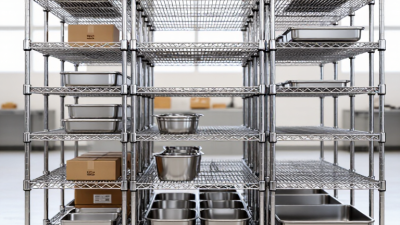
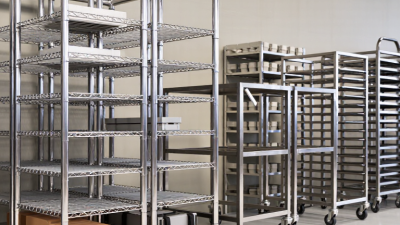
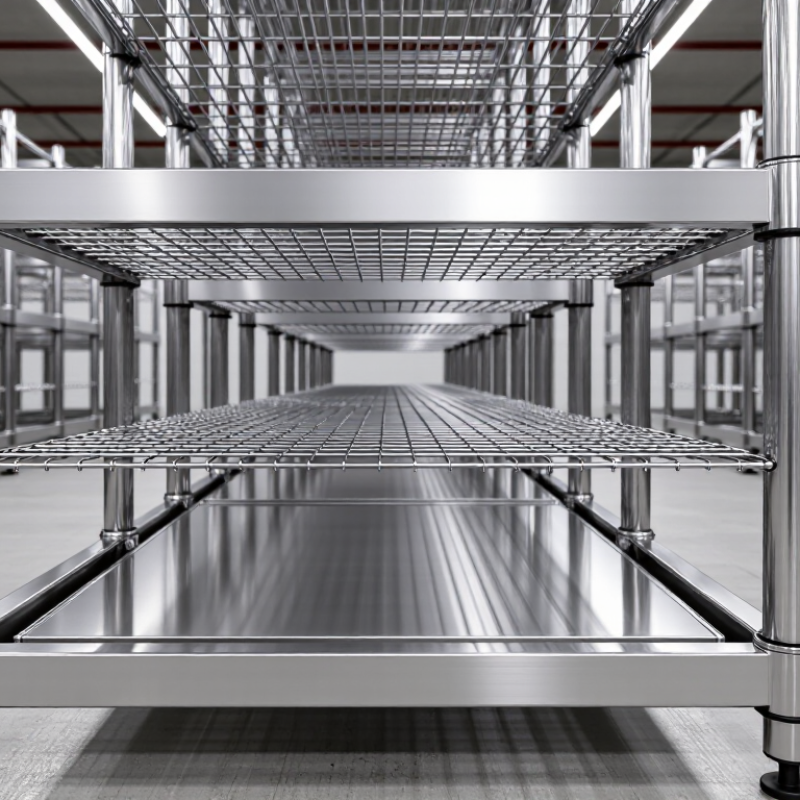
Stainless steel wire racks are open storage systems made from welded wire shelves, vertical posts, clips, and optional casters. Their open structure improves airflow, visibility, and drainage. Most commercial models use 304 stainless steel, while 316 is preferred near salt, chemicals, or persistent moisture. Shelf height should be adjustable, because real storage loads rarely stay identical.
The rack’s performance depends on wire diameter, weld quality, post thickness, shelf span, and leveling feet. A polished surface alone proves little. Inspect weld joints, corner stability, wheel brakes, and the stated load rating. Grand View Research’s Stainless Steel Market Size, Share & Trends Analysis Report projects the global stainless steel market to grow at about 6.2% annually from 2023 to 2030. This supports continued material availability, but it does not guarantee every rack is well engineered.
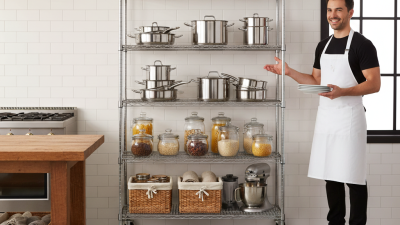
Applications include food preparation rooms, commercial kitchens, hospitals, laboratories, cold storage, cleanrooms, warehouses, and retail backrooms. In humid areas, raised shelves prevent contact with wet floors. In kitchens, open wires reduce trapped crumbs and simplify cleaning. World Stainless reported approximately 58 million tonnes of crude stainless steel production in 2023, showing the material’s extensive industrial use. Still, one weakness deserves attention: thin wire and excessive shelf spacing can create local bending. Chinese manufacturers and suppliers should provide drawings, load tests, material certificates, and packaging details. Buyers should request them. Small omissions become expensive later.
Key Factors for Choosing a China-Based Wire Rack Manufacturer
Choosing a China-based stainless steel wire rack manufacturer requires more than comparing online prices. Material quality, production control, and communication determine whether racks perform reliably after delivery. Ask for the exact stainless steel grade, wire diameter, surface finish, and load rating. These details should appear on a written specification. Not vague promises.
Request samples before approving a large order. Inspect weld points, corners, spacing, and caster mounts by hand. A rack may look polished while weak welds fail under repeated loading. Ask how the factory checks dimensions and load capacity during production. Photos help, but measured inspection records provide stronger evidence. An independent factory visit or video inspection can verify equipment, workers, and storage conditions. Look for clean cutting areas and protected finished goods. Small details matter.
Packaging deserves equal attention. Thin stainless parts can scratch when separators are missing. Confirm carton strength, corner protection, labeling, and replacement procedures before shipment. Clear answers show practical experience. Still, no supplier is perfect. An early sample may reveal uneven polishing or a minor dimensional error. That is not automatically a failure, but the response matters. Reliable manufacturers explain the cause, correct it, and document the change. Compare lead times, minimum quantities, customization limits, and after-sales support. The cheapest quotation can become expensive after rework, delays, or damaged goods.
Key Factors for Choosing a China-Based Stainless Steel Wire Rack Manufacturer
Suggested procurement evaluation weights for comparing manufacturing partners. Higher percentages indicate greater influence on total supplier selection.
Material quality and corrosion resistance are essential for stainless steel racks used in kitchens, laboratories, warehouses, and industrial environments. Consistent dimensions, verified load capacity, production quality control, export experience, lead-time reliability, and total cost should also be reviewed before placing an order. The percentages shown are a practical buyer evaluation framework rather than data from any individual company.
Custom Design Options, Materials, and Surface Treatments
A China-based stainless steel wire rack manufacturer should offer more than standard sizes. Custom design begins with the working environment. Engineers review load weight, shelf spacing, corner clearance, and handling methods before drafting a rack. Small details matter. A 2 mm spacing change can affect cleaning and storage efficiency.
Material selection depends on exposure and use. Stainless steel 304 suits many indoor storage applications. Stainless steel 316 provides stronger resistance in salty, humid, or chemical-prone areas. Wire diameter also affects stability. Thicker wire supports heavier loads, while thinner wire can reduce weight and cost. A careful supplier should confirm these choices through drawings, samples, and load checks.
Surface treatment changes both appearance and maintenance. Electropolishing creates a smoother surface and can reduce areas where residue collects. Passivation helps restore corrosion resistance after fabrication. Brushed finishes offer a practical appearance, but scratches may become visible over time. Polished surfaces look clean, yet fingerprints can show quickly. Not every custom option is an improvement. In my experience, a rack that looks impressive may perform poorly if drainage or access is overlooked. Weld quality, dimensional inspection, and packaging protection deserve equal attention. A reliable manufacturer should provide clear tolerances, material records, and sample approval before production. Mistakes still happen, especially with unusual designs. Honest communication makes them easier to correct.
Supplier Evaluation, Pricing, Ordering, and Export Considerations
Choosing a top stainless steel wire rack supplier requires more than catalog photographs.
Request mill certificates, wire diameter records, weld samples, and load-test results. For food-service racks, check 304 or 316 grade documentation, surface finish, and corner safety. World Stainless reported approximately 58.4 million tonnes of crude stainless steel production in 2023. That scale supports broad sourcing, but it does not prove one factory’s consistency. I would audit batch traceability and inspect random cartons before approval. A polished showroom can still hide uneven welds.
Pricing should separate steel, fabrication, packaging, tooling, inland freight, and export charges.
Ask whether the quotation uses actual weight or theoretical weight. Nickel volatility can change stainless costs, so confirm the validity period and adjustment formula. Compare three written quotations with identical drawings and tolerances. The cheapest offer is often incomplete. For ordering, define rack dimensions, load per shelf, finish, carton protection, quantity, and inspection rules. A pilot order reduces costly surprises, although it adds time. My preference is a signed pre-production sample, not only a digital rendering.
Export planning needs HS classification, commercial invoices, packing lists, certificates of origin, and destination requirements.
UNCTAD states that ships carry over 80% of world merchandise trade. Freight schedules and port charges therefore deserve written confirmation. Use moisture barriers, edge guards, and carton drop testing for long ocean routes. Confirm Incoterms, insurance responsibility, and who handles customs data. This process is not perfect. Small errors in dimensions or documents can delay a container.