Top 10 Big Stainless Steel Bowl Manufacturers Worldwide
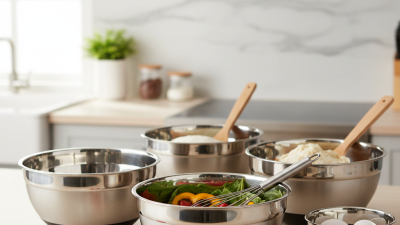
A Big Stainless Steel Bowl may look simple, yet its performance depends on steel quality, forming accuracy, surface finish, and daily handling. In commercial kitchens, food factories, laboratories, and hospitality settings, small differences matter. A rim that feels sharp can slow cleaning. A weak base can wobble under heavy ingredients. Poor polishing may leave stains, odors, or cleaning residue.
This introduction presents ten leading manufacturers from different regions. The selection considers manufacturing experience, product consistency, stainless-steel grades, capacity, customization, quality control, and export reliability. Particular attention goes to food-contact suitability, smooth welds, reinforced rims, stable bases, and usable volume markings. These details often reveal more than attractive catalog photographs. They also help buyers compare bowls designed for mixing, storage, preparation, or industrial processing.
Reliable sourcing requires more than reading a company profile. Buyers should request material certificates, dimensional drawings, sample inspections, and clear production photographs. Certifications can support confidence, but they should be checked for scope, validity, and issuing body. Factory audits, packaging tests, and communication records may expose practical strengths or weaknesses.
The ranking is a useful starting point, not an absolute verdict. Market data changes, and some manufacturers publish limited information. A supplier strong in mass production may not suit a restaurant seeking handmade finishes. Likewise, a low price can hide thinner walls or higher replacement costs. This guide encourages careful comparison, direct verification, and honest reflection before purchase. The best choice is not always the largest factory. It is the manufacturer that consistently matches the bowl’s intended use.
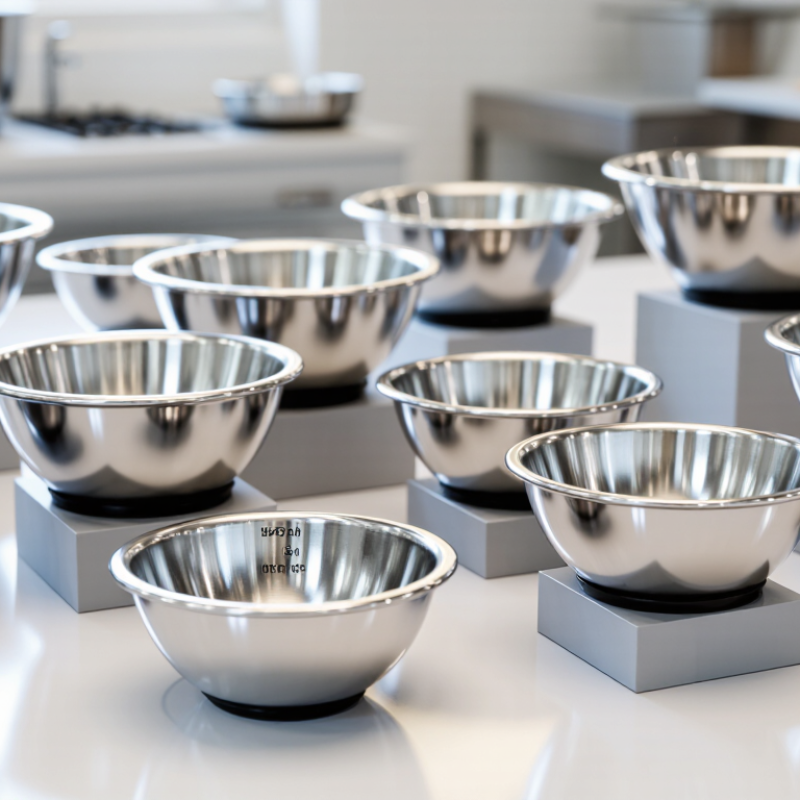
Definition and Scope of Large Stainless Steel Bowls
Large stainless steel bowls are generally defined by capacity, diameter, and intended workload rather than appearance alone. In professional settings, a bowl holding 10 liters or more is often considered large. Some buyers use 20 liters as the practical threshold. This boundary is not universal.
The scope includes mixing bowls, preparation basins, storage vessels, and industrial processing containers. Typical diameters range from 35 to 80 centimeters, with depths selected for safe stirring and lifting. A broad rim helps users pour ingredients without spilling. Reinforced bases reduce movement on wet worktables. Rolled edges also improve comfort during repeated handling.
Material quality requires closer attention than size. Common food-contact grades include 304 stainless steel, while 316 may suit environments with higher chloride exposure. Surface finish matters because rough welds can trap residue and complicate cleaning. Reliable manufacturers should provide material records, dimensional tolerances, load guidance, and cleaning instructions. Factory experience is visible in consistent welds, balanced weight, and smooth handles. It is not visible in polished marketing language. Buyers should also examine whether capacity refers to the full rim or the usable working volume. That small difference can affect production planning. A bowl may look industrial but still flex under heavy dough. Real testing remains important. Even this definition needs revision when laboratories, kitchens, and factories use different equipment.
Key Criteria for Comparing Global Bowl Manufacturers
Top 10 Big Stainless Steel Bowl Manufacturers Worldwide
Comparing global bowl manufacturers requires more than checking factory size. The World Stainless Association reported approximately 58.4 million tonnes of crude stainless steel production in 2023. That scale supports supply, but it does not guarantee consistent bowls. Buyers should verify steel grades, heat-treatment controls, and batch traceability. AISI 304 remains common for food-contact applications, while 316 offers stronger resistance in saline or acidic environments.
Production evidence matters. Request ISO 9001 certification, recent audit records, and material test reports. Inspect weld seams, rim finishing, wall thickness, and surface roughness. Small defects become visible under kitchen lighting. The U.S. FDA Food Code emphasizes cleanable, corrosion-resistant food-contact surfaces, making polished interiors and smooth joints practical evaluation points. Ask how rejected bowls are isolated.
Capacity claims can mislead. Check monthly output, forming-machine numbers, tooling flexibility, and lead-time records. Also compare dimensional tolerance, packaging protection, and container-loading efficiency. The International Trade Centre’s trade data can help assess export consistency across stainless-steel tableware categories, although product classifications are not perfectly precise. That limitation deserves attention.
Price should be tested against total landed cost. Include inspection, breakage, rework, freight, and customs variables. A low quotation may hide unstable thickness or inconsistent polishing. Request samples from different production dates. Review them with calipers and a magnet, but do not treat magnetism as a complete grade test. Experienced sourcing teams still need laboratory verification.Winvalid
Regional Overview of Leading Stainless Steel Bowl Producers
Asia remains the main production center for large stainless steel bowls.
World Stainless reported 58.4 million tonnes of crude stainless steel production in 2023. Asia contributed roughly four-fifths of global output, supporting strong regional supply chains. China, India, Japan, South Korea, and Southeast Asia benefit from nearby steel mills, stamping facilities, and export ports.
European producers often compete through food-grade finishing, traceability, and specialized commercial equipment. Their bowls commonly serve bakeries, catering kitchens, laboratories, and industrial food processors.
North American manufacturers focus on durable institutional products and shorter delivery routes. UN Comtrade data for 2023 shows active international trade in stainless kitchen and table articles under HS 7323, although this category includes more than bowls. That limitation matters. Trade statistics can indicate market movement, but they cannot rank bowl manufacturers accurately.
Tips:
Compare steel grade, wall thickness, rim strength, and surface finish. A 304-grade bowl suits many food applications, while 316-grade steel offers stronger corrosion resistance in demanding environments. Ask for test reports, dimensional tolerances, and production samples. Certification claims deserve verification. Some supplier catalogs look impressive, yet practical details remain unclear. Check nesting accuracy, base stability, and packaging damage rates before placing large orders. Procurement decisions should balance regional cost advantages with inspection access, lead time, and after-sales reliability.
Top 10 Manufacturers and Their Product Specialties
Top 10 Big Stainless Steel Bowl Manufacturers Worldwide
Leading manufacturers differ mainly in production strength and product specialization.
Some focus on deep-drawn bowls for commercial kitchens, where smooth curves reduce food residue. Others produce extra-large mixing bowls for bakeries, catering facilities, and food-processing operations. Their factories may use stainless steel grades selected for corrosion resistance, frequent washing, and repeated handling. Heavy-gauge designs offer better stability on worktables. Lighter models support easier lifting and storage. Custom manufacturers can also adjust diameter, rim shape, wall thickness, handles, and surface finish. These details matter more than a highly polished appearance.
Tips:
Ask for material specifications, thickness data, dimensional tolerances, and sample testing. Inspect the bowl’s rim closely. It should feel smooth, firm, and evenly finished. Confirm whether the product is suitable for acidic foods, industrial cleaning, and high-frequency use. A reliable manufacturer should explain its forming process and quality checks clearly. Be cautious with vague claims. They often hide inconsistent production.
Manufacturers with strong engineering experience usually control stretching, welding, polishing, and final inspection in separate stages.
This improves consistency across large orders. Some specialize in seamless construction, while others offer welded bowls with reinforced bases. The best choice depends on usage, not only factory size. A restaurant may value stackable shapes, while a processor may need thick walls and stable footing. Even experienced buyers can overvalue mirror polish. It looks impressive, but poor forming can still cause distortion. Check the details. A small design compromise may become costly after months of daily use.
Quality, Compliance, Sustainability, and Buyer Considerations
Top 10 Big Stainless Steel Bowl Manufacturers Worldwide
Quality begins with measurable controls, not attractive catalogs. For large stainless steel bowls, buyers should review steel grade, wall thickness, weld finish, and dimensional tolerance. Food-contact applications often require traceable material certificates and documented hygiene procedures. ISO 9001 certification supports process consistency, but it does not guarantee perfect products. Inspect the actual batch.
The International Stainless Steel Forum reported approximately 58.4 million tonnes of global stainless steel production in 2023. This scale shows strong supply capacity, yet capacity does not equal reliability. Ask each shortlisted manufacturer for inspection records, surface-roughness results, load testing, and corrective-action evidence. The World Steel Association’s sustainability data also shows that steel production remains energy intensive. Therefore, energy sourcing and emissions reporting deserve attention.
Sustainability needs evidence. Request recycled-content figures, water-use data, packaging details, and end-of-life guidance. The OECD Due Diligence Guidance recommends risk-based supply-chain checks, which can help buyers examine labor, sourcing, and environmental controls. Do not accept vague claims.
Fit matters.
A buyer should compare tool maintenance, replacement-part availability, lead times, and export documentation. Large bowls may look simple, but uneven bases can cause instability on busy production lines. I would also test samples under real washing and handling conditions. Laboratory results alone can miss practical problems. A perfect scorecard is unrealistic; transparent weaknesses are often more useful than polished promises.
Top 10 Big Stainless Steel Bowl Manufacturers Worldwide - Quality, Compliance, Sustainability, and Buyer Considerations
Material selection is a practical starting point when evaluating large stainless steel bowl manufacturers. The chart compares the minimum alloy content specified for common stainless steel grades under ASTM A240. Higher chromium supports corrosion resistance, while nickel and molybdenum can improve performance in demanding applications.
Buyer note: Ask suppliers to provide material certificates, food-contact compliance documentation, surface-finish specifications, weld-quality records, traceability information, and evidence of environmental management. ASTM A240 chemical limits are material benchmarks and do not by themselves confirm a finished bowl’s complete compliance or sustainability performance.