China’s Large Stainless Steel Bowl industry combines advanced forming equipment, skilled welders, and extensive export experience. Many manufacturers serve restaurants, food processors, catering companies, and household brands. Their products may look similar, but production quality can differ greatly.
A reliable comparison examines stainless-steel grade, material thickness, rim construction, weld consistency, polishing quality, and dimensional accuracy. Food-contact documentation also matters. Common choices include SUS 304, while SUS 316 may suit more corrosive environments. The correct grade depends on ingredients, cleaning chemicals, and operating temperature.
Stainless-steel fabrication consultant Marcus Lee explains, “A bowl is only as reliable as its welds, finish, and traceability.” This practical view deserves attention. A bright surface can hide weak seams. A low price can conceal inconsistent thickness. Sometimes, even attractive factory samples fail during repeated washing or stacking.
This guide introduces ten notable Chinese manufacturers of Large Stainless Steel Bowl products. The selection considers manufacturing capability, customization, quality controls, export experience, and customer support. It does not treat factory size as proof of excellence. No ranking is perfect.
Buyers should request material certificates, sample inspections, production photographs, and clear tolerance data. They should also confirm packaging strength before shipment. Small dents can become costly claims.
The strongest supplier is not always the largest. It is the manufacturer that understands your actual use, documents its process, and responds honestly when specifications need revision. That standard requires careful questioning, practical testing, and a willingness to reconsider first impressions.
China Top 10 Large Stainless Steel Bowl Manufacturers
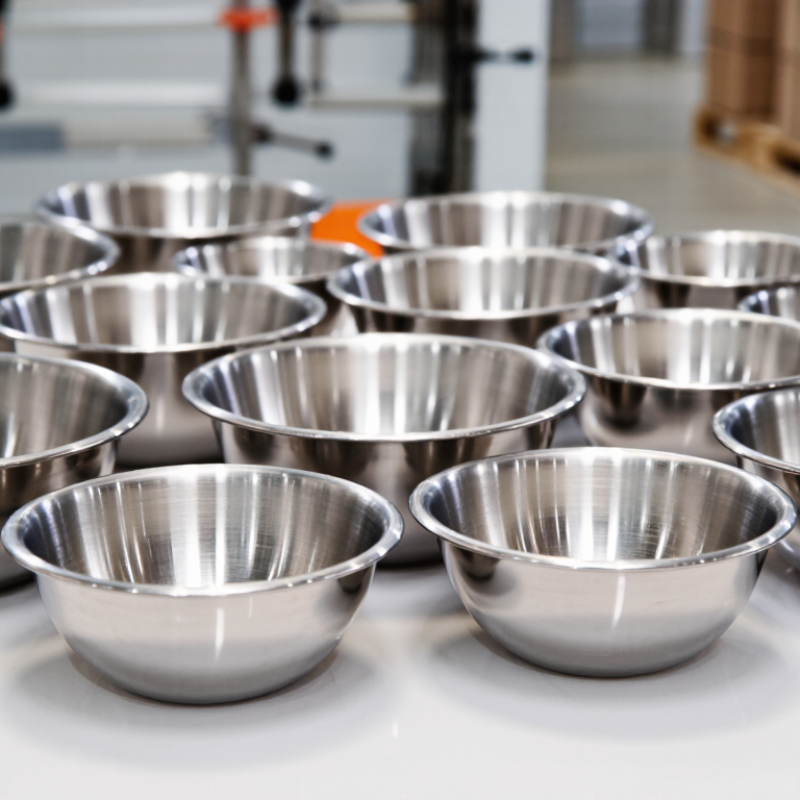
China’s large stainless steel bowl manufacturing industry supports food processing, catering, healthcare, and commercial kitchens. Its strength comes from flexible production and a mature metalworking supply chain. Manufacturers commonly use deep drawing, spinning, or welded fabrication for oversized bowls. Each method leaves different marks on durability, cost, and surface quality.
Material selection requires practical knowledge. Food-grade 304 stainless steel suits most kitchens, while 316 offers stronger resistance in demanding environments. Bowl thickness, rim design, base stability, and weld finishing affect daily performance. A heavy bowl should not wobble when placed on a wet worktable. The inner surface should feel smooth under a gloved hand. Small details matter.
Quality checks often include dimensional inspection, visual examination, surface testing, and material documentation. Reliable manufacturers can provide production samples, batch records, and clear tolerance data. Factory visits also reveal useful details, such as storage conditions and polishing discipline. Not every workshop maintains the same consistency. That needs honest review. A polished sample may hide uneven production control. Buyers should compare several batches, confirm packaging strength, and test bowls under actual working conditions. Scratches, dents, and difficult cleaning areas often appear only after repeated use.
Anonymous industry comparison based on commonly documented product specifications, material grades, manufacturing methods, and compliance requirements for large stainless steel bowl production in China.
| No. | Manufacturing Profile | Typical Bowl Diameter | Common Capacity | Typical Material | Indicative Wall Thickness | Manufacturing Process | Surface Finish | Typical Application | Relevant Compliance Reference |
|---|---|---|---|---|---|---|---|---|---|
| 01 | High-volume household range | 300–400 mm | 5–10 L | Food-contact 304 stainless steel | 0.60–0.80 mm | Deep drawing with trimming and edge rolling | Mirror or satin | Mixing, washing, food preparation | GB 4806.9-2016; GB/T 3280 |
| 02 | Heavy-duty catering range | 350–500 mm | 8–20 L | 304 stainless steel | 0.80–1.20 mm | Multi-stage deep drawing and reinforced rim forming | Brushed | Restaurants, commercial kitchens | GB 4806.9-2016; ASTM A240 material reference |
| 03 | Extra-large food-service range | 450–600 mm | 15–35 L | 304 stainless steel | 1.00–1.50 mm | Hydraulic forming or heavy-gauge deep drawing | Satin | Bulk food preparation and catering | Food-contact declaration; GB/T 3280 |
| 04 | Premium hygienic range | 280–450 mm | 4–15 L | 304 or 316 stainless steel | 0.70–1.20 mm | Precision deep drawing and electropolishing option | Polished | Professional kitchens and hygienic processing | GB 4806.9-2016; EN 10204 inspection documentation |
| 05 | Industrial processing range | 500–800 mm | 30–80 L | 304 stainless steel | 1.20–2.00 mm | Spinning, hydraulic forming, and reinforced base forming | Mill or brushed | Food processing and ingredient handling | Material traceability and food-contact compliance |
| 06 | Anti-slip base range | 300–450 mm | 6–18 L | 304 stainless steel | 0.70–1.00 mm | Deep drawing with spot-welded or pressed base | Brushed | Household and institutional kitchens | GB 4806.9-2016; dimensional inspection |
| 07 | Pouring-rim range | 260–400 mm | 3–12 L | 304 stainless steel | 0.60–0.90 mm | Deep drawing with formed pouring lip | Mirror or satin | Baking, batter mixing, liquid transfer | GB 4806.9-2016; edge-safety inspection |
| 08 | Stackable storage range | 300–550 mm | 8–30 L | 304 stainless steel | 0.70–1.20 mm | Deep drawing with nesting geometry and rolled rim | Satin | Food storage and commercial preparation | GB 4806.9-2016; nesting and load checks |
| 09 | Reinforced industrial range | 600–1,000 mm | 60–180 L | 304 stainless steel; 316 option | 1.50–3.00 mm | Plate rolling, TIG welding, grinding, and passivation | Brushed or polished | Industrial food and chemical processing | ASTM A240; EN 10204; weld and passivation records |
| 10 | Custom-engineered large range | 800–1,500 mm | 150–500 L | 304, 316, or specified stainless steel grade | 2.00–4.00 mm | Segment forming, welding, pickling, and passivation | Project-specific | Industrial batching and processing systems | Customer specification; material certificates; weld inspection |
Note: The rankings are presented as anonymous manufacturing profiles rather than named companies or brands. Dimensions, capacities, and thicknesses are typical specification ranges and may vary according to tooling, material grade, tolerance, and customer requirements.
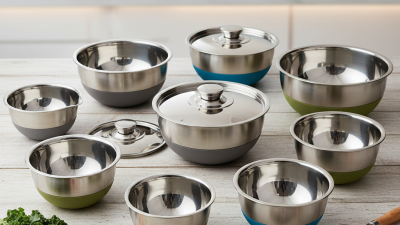
When evaluating Chinese stainless steel bowl manufacturers, inspect material evidence before judging appearance. Ask for mill certificates confirming grades such as 304 stainless steel. For acidic or salty food applications, corrosion resistance deserves closer attention. A bright surface can impress buyers. It cannot prove durability.
During factory evaluations, check bowl thickness at the rim, base, and sidewall. Uneven measurements may cause deformation during shipping or repeated washing. Examine welds under strong light. Rough seams can collect residue and complicate cleaning. Request food-contact test reports from credible laboratories, not only internal inspection sheets. Ask how each batch is traced from raw coil to finished carton.
Production capability also matters. Review sample consistency, tooling maintenance, quality checkpoints, and packaging strength. Drop-test a packed sample if possible. Corrugated cartons may look adequate but fail under warehouse stacking. Ask for realistic lead times and minimum order quantities. Visit the workshop, or arrange a documented remote audit with live video. Photos alone are weak evidence.
Communication reveals operational reliability. Confirm drawings, tolerances, surface finishes, and inspection standards in writing. A supplier that admits a production limit may be more trustworthy than one promising everything. I would still request a small pilot order. Specifications can be correct, yet the final packing or polishing may disappoint. Check again.
China’s top 10 large stainless steel bowl manufacturers are best compared through measurable production evidence.
The World Stainless Association reported about 36.7 million metric tons of Chinese stainless steel output in 2023. That represented roughly 63% of global production. This industrial depth supports large-bowl manufacturing, but scale alone proves little.
A reliable supplier should disclose steel grade, sheet thickness, rim construction, and dimensional tolerance. Food-service bowls commonly use 304 stainless steel, while 316 offers stronger corrosion resistance in demanding environments. Buyers should inspect weld smoothness, polishing consistency, stacking stability, and batch traceability. ISO 9001 systems help control processes, while food-contact documentation supports safer procurement. Third-party reports from Intertek, SGS, or equivalent laboratories can strengthen verification.
Ask for production photos, sample measurements, and recent inspection records. Short lead times matter.
The strongest manufacturers usually combine deep-drawing, spinning, laser welding, automated polishing, and controlled packaging. Large diameters need careful forming, because uneven walls can cause wobbling or cracking. The ranking is not absolute. Export experience, customization capacity, and after-sales response may change its order for each buyer. A polished catalog is not proof of reliable output. Even experienced purchasers can overlook packing damage, hidden scratches, or tolerance drift between batches. That gap deserves attention when evaluating the top 10 large stainless steel bowl manufacturers in China.
China’s top 10 large stainless steel bowl manufacturers should be assessed by range, material control, and production depth. Their catalogs commonly cover mixing bowls, serving bowls, prep bowls, pet bowls, and industrial containers. Capacities may run from 300 milliliters to more than 50 liters. That range matters for retailers, kitchens, and food-processing operations.
Material selection separates capable suppliers. Food-contact bowls typically use 304 stainless steel, while 316 offers stronger resistance in salty or acidic environments. Lower-cost 201 stainless steel can suit less demanding applications, but buyers should verify composition through mill certificates. The International Stainless Steel Forum reported global crude stainless steel production of about 58.4 million tonnes in 2023. This scale supports broad material availability, yet it does not guarantee consistent quality. A small concern.
Manufacturing capabilities include deep drawing, automated spinning, laser welding, edge rolling, mirror polishing, and passivation. Experienced factories should control wall thickness, rim symmetry, surface roughness, and dimensional tolerance. ASTM A240 and EN 10088 references can strengthen material verification. Grand View Research valued the global stainless steel market at approximately USD 130.8 billion in 2023, reflecting strong industrial demand. However, published market figures vary by scope and method. Buyers should request production samples, inspection records, and batch-level testing before ranking suppliers. Practical evidence beats catalog claims.
China Top 10 Large Stainless Steel Bowl Manufacturers
How to Select a Suitable Chinese Stainless Steel Bowl Supplier
Selecting a Chinese stainless steel bowl supplier requires more than comparing prices. Check the steel grade, wall thickness, diameter tolerance, and surface finish. Grade 304 suits many food-service applications, while grade 316 offers stronger corrosion resistance in demanding environments. Ask for material certificates and food-contact test reports. Do not accept unclear documents.
Request a physical sample before placing a large order. Inspect the rim by hand. It should feel smooth, without sharp edges, dents, or uneven polishing marks. Check the bowl on a flat surface for wobbling. A polished sample can mislead. Confirm whether mass production uses the same tooling, welding process, and inspection standard. Small details matter.
Review the supplier’s production capacity, quality-control process, packaging method, and delivery record. A factory visit or independent audit can reveal storage conditions, equipment maintenance, and worker procedures. Ask how the supplier handles rejected products and replacement claims. Clear answers build trust. Also compare minimum order quantities, mold charges, payment terms, and lead times in writing. I have seen buyers focus on unit cost and overlook packaging damage or inconsistent batch sizes. That mistake can become expensive. Choose a supplier that communicates precise measurements and admits practical limitations. Ask for evidence.
Chromium content is a practical first screening factor when evaluating stainless steel bowl suppliers. AISI 201, 304, 316 and 430 are commonly specified stainless steel grades; higher chromium generally supports better corrosion resistance, while 316 also contains molybdenum for improved resistance in salty or acidic environments. Buyers should confirm the exact grade, mill test certificate, food-contact compliance, thickness and surface finish with each supplier.