
A kitchen sink is used more often than its appearance suggests. It catches rinsed vegetables, heavy pans, and the small knocks of daily cooking. A Stainless Steel Sink can suit busy kitchens because it is durable, widely available, and easy to pair with different countertops. But “stainless” does not mean identical. Gauge, alloy, bowl depth, finish, and installation style all affect how a sink feels and performs.
Houzz’s 2024 U.S. Kitchen Trends Study reported that undermount sinks were the most popular style among homeowners upgrading their kitchens, at 58%. That figure describes installation preference, not material quality. It still matters: an undermount bowl can make wiping crumbs from the counter into the sink feel effortless. NKBA CEO Bill Darcy has described the kitchen as “the heart of the home.” The sink is one of its hardest-working parts.
Small details matter. A thin bowl may sound louder when a pan lands; a deep basin may feel awkward for someone with limited reach. This guide compares practical options, from steel thickness and sound-dampening pads to bowl layout, finish, and mounting. It also weighs trade-offs that product listings often gloss over. There is no perfect sink for every household. The best choice depends on your cooking habits, counter space, budget, and tolerance for water spots. A little reflection before buying can prevent years of daily annoyance.
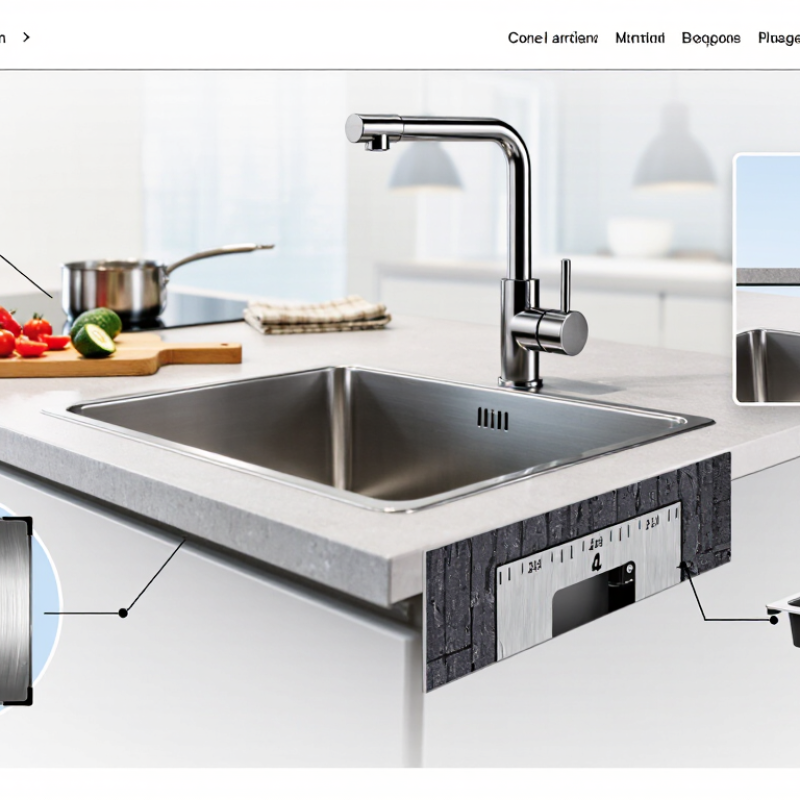
Identify how the sink will be used on an ordinary busy day. A household that washes large pans needs a different basin than someone who mostly rinses cups. Measure the cabinet opening, countertop depth, and available plumbing space before choosing a size. Measure twice. A deep bowl can hide stacked dishes, but it may feel uncomfortable if you are short or have limited reach.
Think about your routine, too. A single basin gives wide, uninterrupted space for baking sheets; a divided sink helps separate rinsing from washing. If you cook often, check that the bowl can hold your largest pot without awkward tilting. Consider where the faucet, soap dispenser, and drain will sit, so they do not crowd the work area. Small details matter.
Stainless steel is practical, but the right choice depends on installation and care. An undermount sink can make wiping crumbs into the bowl easier, while a top-mount model may suit some existing counters. Check the cabinet’s support and the installer’s requirements, especially for a heavy, deep basin. Thicker steel may feel sturdier, yet it does not prevent every dent or water spot. That part is easy to overlook. If you have hard water, expect to wipe the surface more often. A sink that looks perfect in a showroom may not fit your actual habits, so compare its dimensions with your cookware and daily cleaning routine.
A sink should fit the work, not just the countertop. The 2023 Houzz U.S. Kitchen Trends Study found stainless steel was the most commonly selected sink material, chosen by about 72% of homeowners upgrading their sinks. That popularity makes sense: steel handles daily use and pairs with many finishes. But material alone won’t make a sink practical.
Compare bowl layouts against your routine. A single, wide bowl can hold a roasting pan flat, while a double bowl lets you rinse vegetables beside soaking dishes. The trade-off is real. A divider can limit space for bulky cookware, and a large single bowl may leave no separate place for rinsing. Measure the cabinet width, plumbing position, and largest pan before choosing. Even a few inches matter.
Size also depends on how you work. A deeper basin hides dishes, but can make reaching the bottom tiring; a shallower one may splash more. The National Kitchen & Bath Association’s kitchen-planning guidance emphasizes functional clearances and workflow, so check that the sink does not crowd nearby prep space or walkways. For a compact kitchen, a 25-inch sink may preserve counter area; a larger cabinet can support a broader bowl. These are starting points, not rules. I’d test the dimensions with a cardboard outline before ordering. It feels fussy, but regret is worse.
| Sink Style | Typical Overall Size | Bowl Configuration | Typical Bowl Depth | Best Suited For | Key Considerations |
|---|---|---|---|---|---|
| Single-Bowl Sink | Approximately 24–33 in. wide × 18–22 in. front to back | One large, uninterrupted bowl | 8–10 in. | Washing large pots, baking trays, and bulky cookware; kitchens that need flexible basin space | Provides generous open space, but does not separate washing and rinsing tasks. Check cabinet width and sink dimensions before purchase. |
| Equal Double-Bowl Sink | Approximately 30–36 in. wide × 18–22 in. front to back | Two similarly sized bowls, usually divided by a central partition | 8–10 in. per bowl | Separating food preparation, washing, and rinsing tasks | Offers two distinct work areas, but each bowl is narrower than a single-bowl basin and may not fit large pans easily. |
| Low-Divide Double-Bowl Sink | Approximately 30–36 in. wide × 18–22 in. front to back | Two bowls with a divider that sits below the rim | 8–10 in. per bowl | People who want separate basins with more room to maneuver larger items | The lower divider can make it easier to handle wide cookware across both bowls, though water may pass between sides more readily. |
| Offset Double-Bowl Sink | Approximately 30–36 in. wide × 18–22 in. front to back | One larger bowl and one smaller bowl | 8–10 in. per bowl | Combining a main washing basin with a separate space for rinsing or food preparation | Useful when two different basin sizes suit your routine. Confirm the larger bowl is on the preferred side and works with the drain and cabinet layout. |
| Workstation Sink | Commonly 30–36 in. wide; overall depth varies by model | Usually a single bowl with ledges for sliding accessories | 8–10 in. | Meal preparation and kitchen tasks performed directly over the sink | Accessories such as cutting boards or drying racks can extend the work surface. Check accessory storage, ledge compatibility, and clearance around the faucet. |
| Bar or Prep Sink | Approximately 15–24 in. wide × 15–20 in. front to back | Usually one compact bowl | 6–8 in. | Kitchen islands, beverage stations, or secondary food-preparation areas | Needs less counter space than a main sink, but is generally too small for washing large cookware. Plumbing and countertop cutout requirements still apply. |
Buying note: Dimensions are typical planning ranges, not fixed standards. Verify the exact sink dimensions, minimum cabinet size, countertop cutout, mounting method, drain position, and faucet clearance for the model you select. Stainless steel thickness is commonly described by gauge; a lower gauge number indicates thicker steel.
A stainless steel sink’s grade affects how well it resists corrosion. Grade 304 is a common choice for household kitchens and handles everyday moisture well. Grade 316 offers added resistance to salts and certain chemicals, but may be unnecessary in many homes. Check the product specification rather than relying on a vague “premium steel” claim. The surrounding environment matters.
Gauge describes sheet thickness in many sink listings. A lower number usually means thicker steel: 16-gauge is thicker than 18-gauge. Thicker bowls can feel sturdier and may reduce the sharp clang of a dropped pan, though mounting and insulation also affect noise. Finish changes daily upkeep. Brushed steel softens the look of small scratches; polished steel reflects more light but can show water spots. Looks matter. It is easy to focus on shine and forget how the sink will look after a week of use.
Tips: Compare grade and gauge on the specification sheet, then view finish samples under your kitchen lighting. Wipe a sample with a damp cloth and let it air-dry. That quick check may reveal spots you would otherwise miss.
Measure the cabinet’s clear width, depth, and height, not just the countertop opening. Houzz’s 2024 U.S. Kitchen Trends Study found that undermount sinks were chosen by 65% of renovating homeowners. That style needs a compatible cabinet and a well-supported countertop edge. Check bowl depth against plumbing, disposal units, and drawer rails. Measure twice.
For quieter washing, look for sound-deadening pads and a coating beneath the bowl. A thicker basin can soften the clang of a dropped spoon, but installation and insulation also affect noise. Stainless-steel gauges can be confusing: lower numbers generally mean thicker steel. Ask for the actual thickness in millimeters, and compare it with the cabinet’s support capacity.
Maintenance depends partly on the steel grade. The British Stainless Steel Association describes grade 304 as an 18/8 stainless steel, meaning about 18% chromium and 8% nickel. That composition helps resist corrosion, but it is not stain-proof. Rinse away salty food residue, dry the basin to limit water marks, and avoid harsh chlorine cleaners. I would still check the care instructions for the exact sink; assuming every stainless surface behaves alike is an easy mistake.
Lower gauge numbers indicate thicker steel. A thicker sink may be more resistant to denting, while sound-dampening pads or undercoating can help reduce noise. Before buying, check the sink’s bowl and overall dimensions against your cabinet, plumbing, and countertop cutout; follow the manufacturer’s cleaning guidance to protect the finish.
A stainless steel sink should fit your budget without becoming a short-lived compromise. The 2024 U.S. Houzz & Home Study reported a median kitchen remodel spend of $24,000. That figure covers much more than the sink, so set a realistic fixture budget before comparing finishes and accessories. A very low price can be tempting. But thin steel may dent more easily, and a noisy basin can make daily washing irritating.
Check the gauge carefully: a lower number means thicker steel, so 16-gauge steel is thicker than 18-gauge. Thickness alone does not guarantee quality; inspect the finish, corner construction, drain fit, and sound-dampening pads. Ask what the warranty covers, how long coverage lasts, and whether labor, stains, or corrosion are excluded. The fine print matters. I’d also compare replacement costs, not just the checkout price. That part is easy to overlook.
Tips
Bring your cabinet measurements, including the available depth, to the showroom. Compare two or three models at similar price points, then read their warranty terms side by side. If the warranty is vague, pause and ask for written details.