Top Tips for Choosing the Right Stainless Steel Sink?
Choosing the right Stainless Steel Sink can significantly impact your kitchen's functionality and aesthetics. Recent industry studies show that over 50% of homeowners prioritize sink selection when remodeling. According to kitchen design expert Maria Johnson, “A well-chosen sink blends utility with style, affecting daily tasks.”
When selecting a Stainless Steel Sink, consider factors such as gauge, finish, and design. A higher gauge means a thinner, yet often more flexible material. Be mindful that some finishes can show scratches more easily than others, which may require extra care.
It's essential to balance aesthetics with practicality. A stylish sink that doesn't suit your cooking style can lead to frustration. Paying attention to these details can ensure you make an informed choice. The right Stainless Steel Sink should enhance your kitchen experience while standing the test of time.
Understanding Different Types of Stainless Steel Sinks Available
When selecting a stainless steel sink, understanding the various types available is crucial. The materials often come in different grades, typically 304 and 316. Grade 304 is common due to its balance of strength and corrosion resistance. Meanwhile, grade 316 offers superior resistance to chlorides, making it ideal for coastal environments. According to the American Society of Mechanical Engineers, using the right grade can extend the life of your sink by up to 30%.
Another factor to consider is the sink's gauge. The gauge refers to the thickness of the steel. A lower gauge indicates a thicker sink. Most residential sinks are 18 to 22 gauge. Sinks at 16 gauge provide more durability but may cost more. A report from the National Kitchen and Bath Association suggests that consumers prefer 18-gauge sinks for everyday use, as they balance cost and functionality effectively.
Finally, explore the finish options, such as brushed, polished, or satin. Each finish impacts maintenance and aesthetics. A brushed finish can hide scratches better than a polished one. However, it may require more frequent cleaning to maintain its appearance. Research indicates that consumers often overlook these details, which can lead to dissatisfaction with their sink choice over time.
Top Tips for Choosing the Right Stainless Steel Sink
This bar chart illustrates the popularity of different types of stainless steel sinks. Top mount sinks are currently the most favored option, while bar sinks have a smaller share of the market. Understanding these preferences can help you choose the right sink for your kitchen needs.
Evaluating Sink Gauge and Thickness for Durability
Choosing the right stainless steel sink involves careful consideration of sink gauge and thickness. The gauge refers to the steel's thickness. A lower gauge number means a thicker sink. For instance, a 16-gauge sink is thicker than a 20-gauge one. Thicker sinks are generally more durable. They resist dents and scratches better than thinner options.
Thickness also impacts sound insulation. Thicker sinks tend to absorb noise better, making them quieter when water is running. However, they may be heavier and require additional support. It's essential to ensure your cabinet can handle the weight. Some people overlook this detail, leading to installation issues.
Not all stainless steel sinks are created equal. Some may look appealing but lack durability. Research the material quality before making a purchase. Check for official certifications that indicate a standard. It's wise to consider how much wear and tear your sink will face. A well-chosen sink will last longer, but compromises may lead to regrets later on.
Top Tips for Choosing the Right Stainless Steel Sink
| Sink Type |
Gauge |
Thickness (mm) |
Durability Rating |
Price Range ($) |
| Topmount |
18 |
1.2 |
Good |
150-300 |
| Undermount |
16 |
1.5 |
Excellent |
300-600 |
| Farmhouse |
18 |
1.2 |
Good |
250-500 |
| Drop-in |
20 |
1.0 |
Fair |
100-200 |
| Double Bowl |
16 |
1.5 |
Excellent |
400-800 |
Considering Sink Size and Configuration for Your Kitchen Space
When selecting a stainless steel sink, the size and configuration should align with your kitchen's layout. According to the National Kitchen and Bath Association (NKBA), almost 60% of homeowners consider sink size a priority in their renovation plans. A well-chosen sink enhances functionality and aesthetic appeal.
Evaluate your cooking habits. If you often prepare large meals, a deep basin can save time. Consider a double sink configuration if multiple users will be in the kitchen. For smaller kitchens, a single bowl may suffice. Remember, a sink that fits poorly can lead to frustration during meal prep.
Tip: Measure your counter space accurately before shopping. A standard sink typically measures between 22 to 33 inches in length. Ensure you account for plumbing and cabinet space.
Reflect on durability as well. Thin stainless steel can dent easily. Choose a sink with a gauge of 16 or 18 for better resilience. Quality matters, especially in a space that endures daily wear. A well-thought-out sink choice improves both functionality and your kitchen's essence.
Exploring Finishes and Styles to Match Your Decor
When choosing a stainless steel sink, the finish and style play a crucial role in enhancing your kitchen's overall look. A brushed finish, for example, not only hides scratches effectively but also adds a contemporary edge to your kitchen. According to a report by the National Kitchen & Bath Association, over 70% of homeowners prefer matte finishes for their subtle elegance. These finishes blend seamlessly with various cabinetry styles and colors.
While selecting a sink, consider the size and configuration. A single basin sink can work wonders in minimalist designs, offering clean lines and ample space. Yet, a dual basin design may suit more traditional styles, providing functionality without sacrificing aesthetics. The American Institute of Steel Construction suggests that sinks with rounded corners and lower edges can create a softer appearance, aligning with trends toward more organic designs.
However, the decision isn't always straightforward. Some finishes may show water spots, demanding regular maintenance. Furthermore, softer finishes can wear down over time, leading to reflection inconsistencies. Balancing practicality and visual appeal can be a challenge. Homeowners often must reflect on their priorities, considering both style and upkeep before making a final choice.
Assessing Installation Requirements and Maintenance Tips
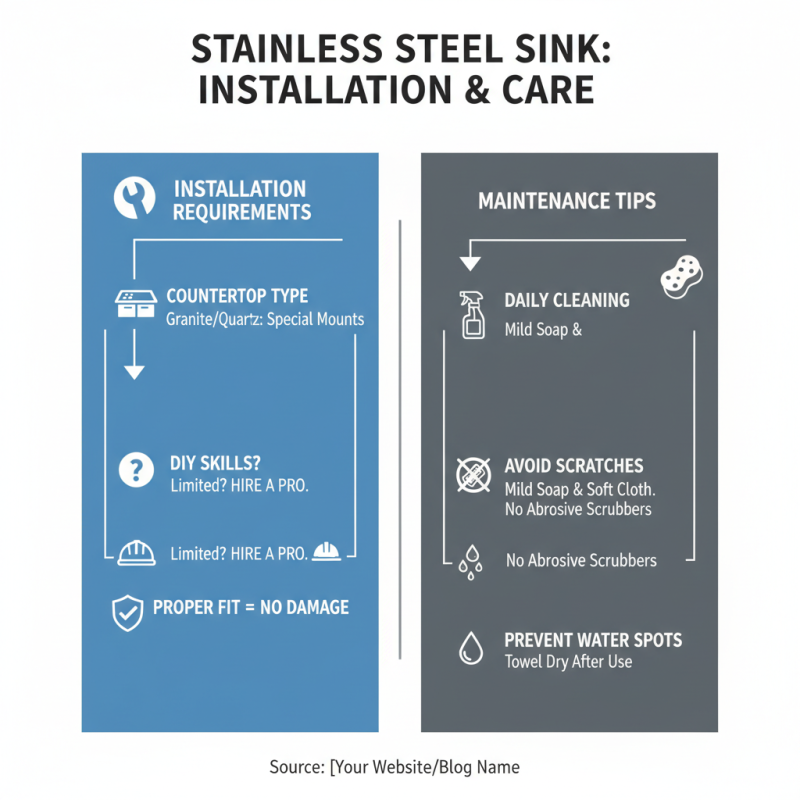
When selecting a stainless steel sink, installation requirements matter greatly. Consider the type of countertop. Some materials, like granite, may need special mounting techniques. If you have limited DIY skills, hiring a professional might be wise. This ensures a proper fit and avoids damage, which is costly.
Maintenance can be simple but requires attention. Regular cleaning with mild soap prevents staining. Stainless steel is durable but can scratch easily. Use non-abrasive cloths to maintain its shine. Pay attention to water spots as well. They can appear easily in hard water areas.
Over time, you might notice some wear. Scratches can dull the surface. A stainless steel polish might be useful. However, frequent polishing could become tedious. Reflecting on your choice of materials and usage can help you decide the best maintenance routine. Consider your lifestyle. Do you often cook? Then perhaps durability should be a priority, not just aesthetics.