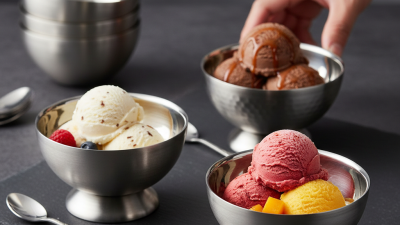
Choosing the China best stainless steel ice cream bowls supplier is not just about finding the lowest quotation. Dessert shops, hotels, and distributors need bowls that look good on the table and withstand frequent washing. Stainless Steel Ice Cream Bowls should have a smooth, even rim, a stable base, and a finish that resists visible scratches during normal use. Ask suppliers to specify the steel grade, bowl capacity, wall thickness, and available surface finishes. Small details matter.
A reliable comparison starts with evidence, not catalog photos. Request a sample and check its weight, seams, balance, and finish under ordinary lighting. Confirm which food-contact documents and material records the supplier can provide for your intended market. A polished catalog is not proof. Ask how the factory handles inspections, production changes, and protective packaging; a dented rim can make an otherwise sound product difficult to sell. For custom orders, clarify logo placement, minimum quantities, lead times, and sample approval before production begins.
There may be no single “best” supplier for every buyer. A small café may value flexible order sizes, while a large distributor may prioritize consistent batches and dependable delivery. Compare written specifications and sample results alongside price. I would still test the bowls after repeated washing, because a first impression can miss practical weaknesses. The sections ahead explain how to assess Chinese manufacturers, compare product quality, and choose a supplier that fits your needs.
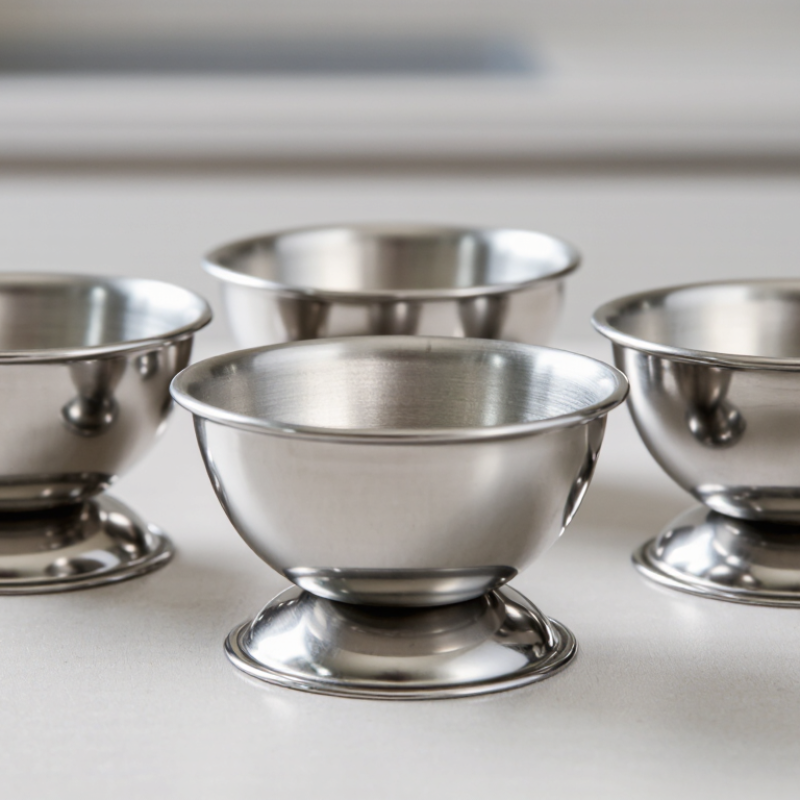
A reliable stainless steel ice cream bowl supplier in China should prove consistency, not just present a polished sample. Ask for material certificates, stated steel grade and thickness, and batch records linking raw material to finished bowls. Inspect the rim for burrs, the inner surface for pits, and the base for wobble. Small defects matter when bowls are stacked, washed, and handled repeatedly.
The International Stainless Steel Forum’s 2023 production report recorded 58.4 million tonnes of global stainless steel production, a 4.6% rise from 2022. That indicates a large materials industry, not that every factory makes dependable tableware. Request food-contact test reports relevant to your destination market, plus documented checks for dimensions, finish, and packaging. Compare a production-run sample with the approved sample; they may differ more than expected. No supplier is perfect. A useful partner shares inspection results, responds clearly to corrective-action requests, and admits where its process still needs improvement.
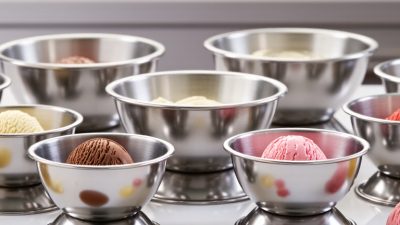
For stainless steel ice cream bowls, grade and traceability matter more than a mirror shine. Grade 304 is widely used for food-contact equipment; grade 316 adds molybdenum and can resist chloride-related corrosion better. That extra resistance may be unnecessary for ordinary serving, but cleaning chemicals and salty environments can change the calculation. World Stainless Association’s Stainless Steel in Figures 2024 reports 58.4 million tonnes of crude stainless steel production in 2023. Scale is not proof of quality. Ask a China-based supplier for the grade designation and mill test certificate, then confirm that the documents match the delivered material.
ASTM A240 covers stainless steel plate, sheet, and strip, not the finished bowl itself. NSF/ANSI 51 addresses materials used in commercial food equipment, but a supplier should clarify whether the bowl or only its material has been assessed. Small details matter. Check wall thickness at several points, smooth rolled rims, and seams without sharp edges or trapped polishing compound. A polished surface can hide scratches, so inspect a production sample under bright light. Passivation and thorough rinsing help protect the surface after forming; request the process details and a clear cleaning guide. Even careful checks cannot replace consistent batch records.
A dependable supplier should document the bowl’s steel grade, thickness, and food-contact suitability. Request a material test certificate, then compare it with the order specification. A magnet check alone cannot confirm stainless steel grade. Check the rim, welds, and inner surface under bright light; rough seams can trap residue. Small details matter.
The World Stainless Association reported 58.4 million tonnes of global stainless steel production in 2023, up 4.6% from 2022. This industry figure shows broad material availability, not that every bowl meets the same quality level.
Capacity needs evidence, not just a large factory photograph. Ask for monthly output, current lead times, and a sample from a recent production batch. Compare that sample with the approved pre-production piece. If quantities rise, confirm that thickness, finish, and dimensions stay consistent. A missed production detail can delay a seasonal launch.
Tips: Send a simple drawing with bowl diameter, depth, wall thickness, finish, and logo placement. Ask how custom tooling affects price and delivery time. Confirm packaging protects the rim from dents. A polished sample may look excellent, but bulk consistency deserves a separate check.
When comparing suppliers in China, ask for a quote that separates bowl cost, packaging, tooling, and freight. Confirm the steel grade, wall thickness, capacity, finish, and minimum order quantity. Two bowls can look identical in a photo but feel quite different in hand. A low price can look tidy on paper; check what it leaves out. Small details matter.
Request a sample before approving bulk production. Inspect the rim for smoothness, check the base for wobble, and compare the sample’s dimensions with your drawings. If the bowls will be washed or chilled frequently, test them under your intended conditions. Ask whether sample fees are refundable against an order, and request clear photos if shipping a sample takes time. Timelines vary. Get dates in writing for sample preparation, approval, production, and dispatch, with room for inspection or revisions.
Tips: Ask for a dated sample and a written production schedule. Clarify when the lead-time clock starts, and whether public holidays or material sourcing may affect it. Share artwork and packaging requirements early. One missed detail can cause a delay, and I would rather ask one extra question than guess.
China Best Stainless Steel Ice Cream Bowls Supplier?
How to Verify a Supplier Before Placing an Order
A polished catalog can make every bowl look dependable. Ask for the exact steel grade, bowl dimensions, wall thickness, and finish before comparing quotations. Request a material test report and food-contact documents for the market where you will sell. Check that the paperwork matches the product, not just a similar item. A shiny surface proves very little.
Order samples and inspect them under ordinary kitchen lighting. Look for uneven rims, sharp edges, wobbling bases, and scratches around the inner surface. Fill a bowl with ice cream, then chill and wash it several times. Note whether condensation gathers underneath or the finish changes. Small tests reveal useful details. They are not a substitute for production checks.
Ask how the supplier inspects bulk orders, handles rejected pieces, and packs bowls for shipment. A live factory call can show equipment and work areas, though it cannot verify every claim. Compare a signed sample with the final inspection photos, and put approved specifications in the purchase agreement. Even careful checks leave some uncertainty. I would not rely on a low price alone; that shortcut is tempting, but often weak.
| Verification Area | What to Request | How to Verify | Practical Acceptance Check | Priority |
|---|---|---|---|---|
| Material grade | Written specification for the bowl body, rim, and any handles or inserts; request material test documentation for the relevant production lot. | Check that the grade is stated consistently on the quotation, drawing, sample records, and material documents. For screening, an XRF analyzer can help distinguish common stainless grades, but it does not reliably measure carbon. | Confirm the exact grade against the intended use and applicable market requirements. Do not treat a magnet test alone as proof of grade. | Essential |
| Food-contact compliance | Applicable food-contact declarations, supporting test reports, and details of the tested material or finished article. | Check the issuing laboratory, report date, sample description, test scope, and whether the documents apply to the bowl being ordered. Identify the destination market before assessing requirements. | Documents should cover the relevant food-contact materials and intended conditions of use; requirements differ by market. | Essential |
| Dimensions and capacity | A dimensioned drawing showing rim diameter, base diameter, height, wall thickness, and stated usable capacity. | Measure a production sample with suitable measuring tools. Verify capacity using a calibrated measuring vessel and agree whether capacity means brimful or usable volume. | Record agreed tolerances on the drawing or purchase specification rather than relying on a product photo. | Essential |
| Wall thickness and weight | Specified thickness range and target finished weight, including the measurement location and tolerance. | Compare several samples with the specification. A micrometer or suitable thickness gauge can be used where the geometry permits; confirm the method for curved areas. | Agree the sampling plan and permitted variation before mass production. Check for unexplained differences between samples and the approved unit. | High |
| Finish and workmanship | Finish description, reference sample, and requirements for the rim, interior, exterior, seams, and welds. | Inspect under good lighting. Check for sharp edges, burrs, dents, visible pits, uneven polishing, loose parts, and rough or incomplete joints. | Approve a signed or otherwise clearly identified reference sample and define acceptable cosmetic defects in writing. | High |
| Cleaning and durability claims | Care instructions and evidence for any claims about dishwasher use, corrosion resistance, or other performance. | Ask what test method and conditions support each claim. Review test reports for the tested model, material, and finish rather than relying on general statements. | Use only claims supported by relevant evidence; performance can depend on material, finish, cleaning agents, and use conditions. | High |
| Production capability and quality control | Production process overview, inspection checkpoints, defect-handling procedure, and sample inspection records. | Request a live video walkthrough or arrange an independent factory inspection. Confirm that inspection records identify the product and production lot. | Agree inspection criteria, sampling approach, and corrective-action process before production begins. | High |
| Sample-to-order consistency | A pre-production sample made to the agreed drawing, material, finish, and packaging specification. | Retain an approved sample and compare the pre-shipment sample or inspection findings against it. | Document any approved changes. Do not rely on a catalog image as the final quality reference. | Essential |
| Packaging and shipping protection | Packaging specification, carton dimensions, packing quantity, and proposed protection for rims and polished surfaces. | Review a packed sample or packaging photos. Check that bowls cannot freely knock against one another during handling. | Agree labeling and packing details, and confirm the final carton data before booking transport. | Medium |
| Commercial terms and order controls | Written quotation covering specification, quantity, lead time, tooling charges if applicable, payment milestones, and delivery terms. | Check that the contract or purchase order matches the approved drawing and sample. Verify payment instructions through a trusted, independently confirmed channel. | Keep specifications, tolerances, inspection requirements, and remedies for nonconforming goods in the written order documents. | Essential |