Inquiry
Form loading...

Top Stainless Steel Salad Bowls for Every Kitchen

A good salad bowl should make everyday preparation easier, not simply look polished on a shelf. The right Stainless Steel Salad Bowl can handle leafy greens, chopped vegetables, marinades, and quick mixing without demanding delicate treatment. Picture rinsed lettuce drying beside a counter, then being tossed with dressing in a bowl that feels steady under a wooden spoon. Small details matter: capacity, a comfortable rim, and whether the bowl fits neatly inside a crowded cupboard.

Stainless steel varies, so check the product details rather than relying on a shiny finish alone. Manufacturers may identify food-contact materials such as 18/8 or 304 stainless steel, but clear specifications are more useful than vague claims. A heavier bowl may feel stable during mixing, while a lightweight one is easier to lift when full. Some designs include nonslip bases or lids; those features can help, though they are not essential for every kitchen. Nesting sets save space, but their sizes should match the meals you actually prepare. Too small is frustrating.

There are trade-offs. Metal bowls can become noisy against counters, and they do not offer the visual warmth of ceramic or wood. They may also show scratches with regular use. These are not deal-breakers, but worth considering before buying. This guide compares practical features, construction, and care needs to help you choose confidently. The best option is not always the most expensive. It is the one that suits your routine.
Top Stainless Steel Salad Bowls for Every Kitchen

Stainless Steel Grades: ASTM A240 Type 304 Contains 18–20% Chromium

For salad bowls, Type 304 stainless steel is a common choice because it combines useful corrosion resistance with everyday durability. Under ASTM A240, Type 304 contains 18–20% chromium. This chromium helps form a thin, protective surface layer when exposed to oxygen. It can help the bowl resist rust and staining during normal kitchen use. That matters.

A bowl’s performance also depends on its finish, thickness, and construction. A smooth interior is easier to rinse after dressing or chopped herbs, while a rolled rim can feel more comfortable to hold. Type 304 is not indestructible. Prolonged contact with salty or acidic foods may leave marks, especially if residue sits on the surface. Rinse it soon after serving, then dry it to reduce water spots.

When shopping, look for a clear material description rather than relying on “stainless steel” alone. If exact composition matters, ask whether the material documentation identifies Type 304 and the relevant standard. A polished surface can look impressive, but it does not prove the steel grade. I’d check the rim and base, too; thin bowls can wobble on a counter. Small detail, easy to miss. A sensible bowl should feel stable when tossed with leafy greens, not just shine under bright lights.
Stainless Steel Chromium Content by Grade

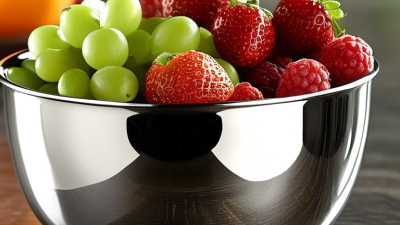
ASTM A240 Type 304 contains 18–20% chromium by weight. The chart compares specified chromium ranges for three commonly used stainless steel grades.

Ranges are percentages by weight. Chromium content is one factor in corrosion resistance; the best grade for a salad bowl also depends on its intended use and care.

Salad Bowl Types: Mixing, Serving, Nested, and Non-Slip Designs

A mixing bowl works best with deep, gently sloped sides that keep greens and dressing from escaping during tossing. Stainless steel is light enough to lift with one hand, yet sturdy bowls feel more controlled when whisking vinaigrette. A wide rim also makes pouring easier. That small detail matters.

Serving bowls usually have broader openings, so guests can reach leafy greens without crushing them. Their polished interiors reflect light, but fingerprints and water spots may show after washing. Nested sets save cabinet space by stacking smaller bowls inside larger ones. Check that each bowl lifts out easily; tight-fitting rims can be awkward when hands are damp.

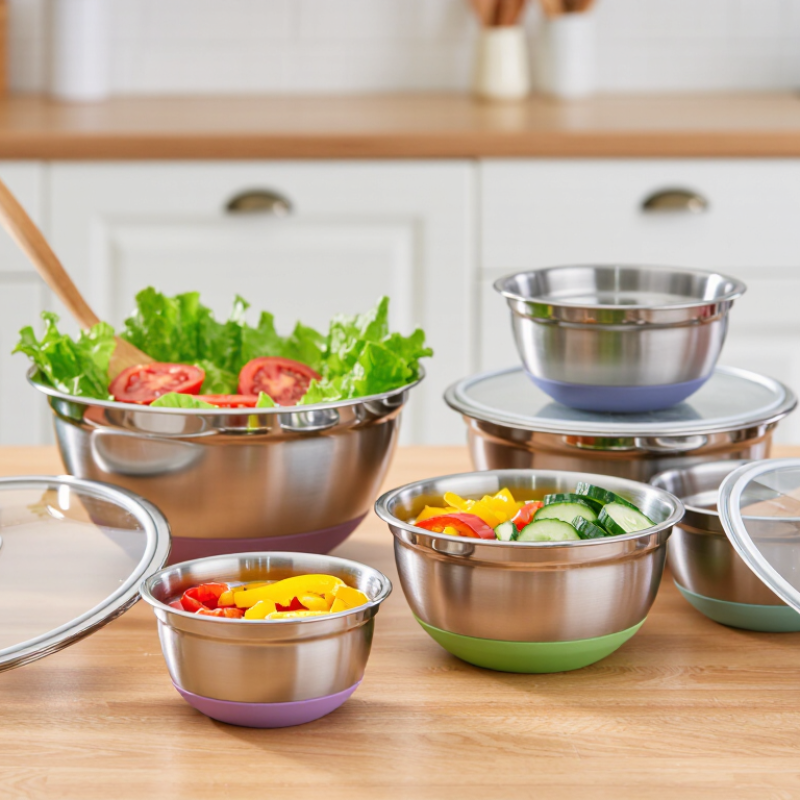
Non-slip designs add a silicone ring or coated base to reduce sliding on a countertop. This helps when mixing thick slaw or beating eggs, especially on smooth surfaces. Still, the grip can collect crumbs around its edge, so inspect whether it is removable for cleaning. Some rings also loosen over time. A slightly imperfect fit is worth noticing before buying, rather than discovering it mid-recipe.

Top Stainless Steel Salad Bowls for Every Kitchen - Salad Bowl Types: Mixing, Serving, Nested, and Non-Slip Designs

Compare common stainless steel salad bowl designs by typical size, construction, and everyday use.

Bowl Type Typical Capacity Typical Diameter and Depth Common Design Features Best Uses Practical Considerations
Mixing Bowl 1–8 qt (about 0.9–7.6 L) About 8–14 in diameter; 3–6 in deep Deep sides, rounded interior, and a broad rim; commonly made from single-wall stainless steel. Tossing salads, whisking dressings, mixing ingredients, and preparing larger batches. A deeper shape helps contain ingredients while tossing. A wide opening makes it easier to add ingredients and clean the bowl.
Serving Bowl 1.5–5 qt (about 1.4–4.7 L) About 8–12 in diameter; 2–4.5 in deep Often has a broad opening, smooth sides, and a finished or rolled rim; may have a polished exterior. Presenting green salads, pasta salads, fruit, or side dishes at the table. Choose a capacity that suits the number of servings. Lightweight metal can be easy to carry but may move when bumped.
Nesting Bowl Set About 0.75–5 qt (0.7–4.7 L) per bowl, depending on the set Individual bowls commonly range from about 6–12.5 in in diameter Several bowls in graduated sizes, designed to stack inside one another; some sets include fitted lids. Food preparation, storing ingredients, serving different dishes, and saving cupboard space. Check the capacity of each bowl and whether lids are included. Stacking bowls should be dry before storage to help prevent trapped moisture.
Non-Slip Bowl 1.5–5 qt (about 1.4–4.7 L) About 8–12 in diameter; 3–5 in deep Stainless steel body with a silicone or rubberized base designed to improve grip on a countertop. Mixing and tossing when extra stability is useful, especially on smooth work surfaces. The base can reduce sliding but does not guarantee the bowl will stay in place. Follow the maker’s care instructions for the non-metal base.

Size note: Dimensions and capacities are typical approximate ranges; actual measurements vary by bowl shape and manufacturer. One US quart is approximately 0.95 liters.

Sizing and Construction: Compare Capacity, Rim Shape, and Steel Gauge

Capacity should match the task, not just the cupboard. A 1.5–2 litre bowl handles whisking eggs or dressing a small salad; a 4–5 litre bowl gives greens room to turn without spilling. These are practical buying ranges, not formal standards. Check the bowl’s usable depth, too. A wide, shallow shape is easy to toss in, but sauces can slosh over the edge.

Rim shape changes handling. A rolled rim feels smoother under wet fingers and is easier to grip, while a sharp, thin edge may feel flimsy. Feel the rim. Compare the stated steel thickness in millimetres, rather than relying only on gauge numbers, which can vary by measurement system. For everyday mixing, a heavier bowl may resist dents better, but it also feels less nimble when lifted. There is no perfect trade-off.

Material claims deserve a closer look. World Stainless reported 58.4 million tonnes of stainless-steel melt-shop production in 2023 in Stainless Steel in Figures 2024; that scale signals broad industrial use, not the quality of any individual bowl. ASTM A240 covers stainless sheet and strip grades, but it does not certify a salad bowl’s finished rim or wall thickness. Ask for the grade and measured thickness. I would not judge durability by shine alone; even a polished bowl can have a thin, easily dented wall.

Food-Equipment Materials: NSF/ANSI 51 Standards for Food-Contact Surfaces

A stainless steel salad bowl earns trust through more than its shine.

NSF/ANSI 51-2023 sets minimum public-health and sanitation requirements for materials used in commercial food equipment, according to NSF. It addresses suitability for food contact, cleanability, and resistance to corrosion under intended conditions. The FDA Food Code 2022 also calls for food-contact surfaces to be durable, corrosion-resistant, nonabsorbent, and easily cleanable.

Looks can mislead. A mirror finish alone does not prove compliance.

For everyday salad service, check that the bowl’s material and intended use are documented by the supplier, rather than relying on “stainless steel” as a complete specification. Acidic dressings, salt, and prolonged contact can challenge some surfaces; scratches and rough seams can hold residue.

A deep, smoothly finished bowl is easier to wash after tossing greens, but it still needs prompt cleaning and thorough drying. NSF’s standard is a useful reference, not a guarantee that every bowl—or every use—is suitable.

I would also inspect the rim and base: small crevices are easy to overlook, even when the interior looks clean.

Cleaning and Longevity: Prevent Scratches, Stains, and Corrosion

A stainless steel salad bowl can handle daily tossing, but its finish still needs gentle care. Wash it soon after serving, especially when dressing contains lemon, vinegar, or salt. Warm water and mild dish soap usually lift oil and food residue. Use a soft sponge, not a metal scrubber. Small scratches happen.

For stuck-on dressing, soak the bowl for a few minutes before wiping. A paste of baking soda and water can help with stubborn marks; rinse it away fully. Avoid leaving salty water or acidic leftovers in the bowl overnight, since prolonged contact may dull the surface or encourage corrosion. Drying with a clean towel also helps prevent water spots, particularly in hard-water areas.

Storage matters, too. Nest bowls with a soft cloth or paper towel between them to reduce scuffing. If the steel has a brushed finish, wipe gently in the direction of its grain. I have found that rushed stacking is often what leaves the most visible marks. Perfectly pristine bowls are unrealistic in a busy kitchen, but simple habits can keep them useful and attractive for years.